Last Updated on September 5, 2026 by Emma Fajcz | Published: August 24, 2022
Florence is full of amazing art, gelato, and food, but this picturesque Tuscan town also hides a unique feature: buchette del vino (wine windows). These historical gems are a delightful way to enjoy a glass of wine like the locals have done for centuries! Here’s our expert guide to exploring Florence’s wine windows like a local.
At a Glance: Florence’s Wine Windows
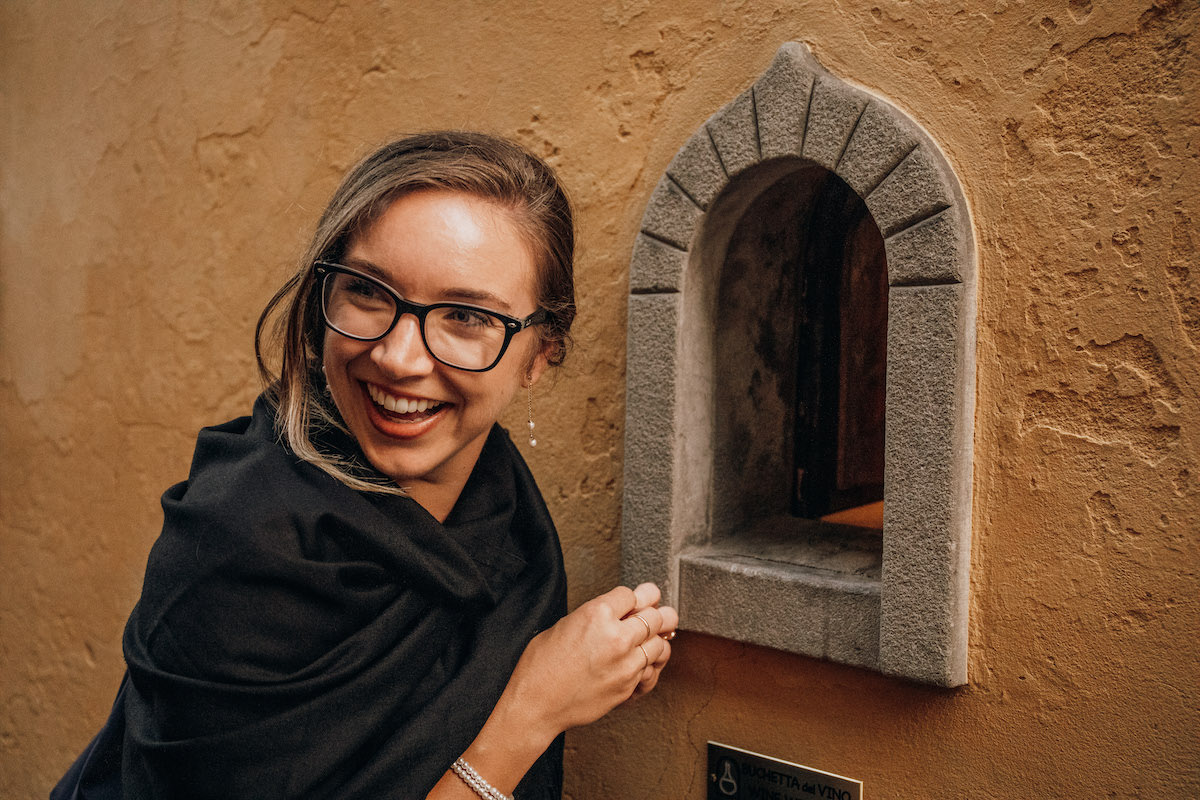
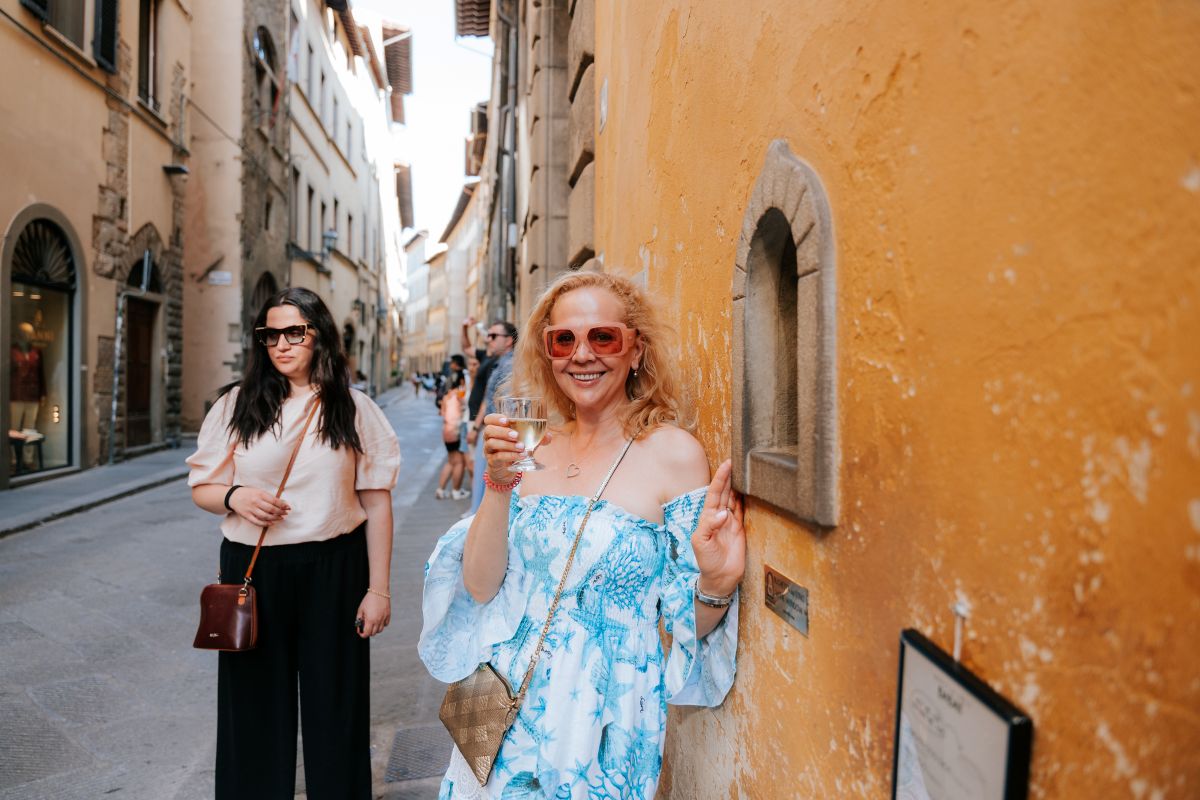
- 🪟 What Are Wine Windows? Buchette del vino (wine windows) are little windows with inscriptions on the walls of some local nobles’ palaces, and are unique to Florence. They’ve been used for over 400 years!
- 🤔 Why Were Wine Windows Made? They were used to sell Tuscan wine in a fiasco (glass bottle) without having to pay taxes or to open the shop. They were a safe way to sell wine during the epidemic of 1630-1633 and during the COVID-19 pandemic.
- 🍷 How Many Wine Windows Are in Florence? There are more than 180 wine windows in Florence scattered are all over the city, but you can find most of them in the Santo Spirito neighborhood and the city center.
- 📃 How Do You Order? Simply walk up to the window, then check for a bell or sign. At some windows, you simply knock (even if the shutters are closed); at others, you ring a bell and someone will come take your order.
- 🍾 What to Expect: Order a glass from the location’s small selection of wines. Tuscan reds are most common, but other wines and drinks are often available. (Bottles are available depending upon the location.) If you’re served in a reusable glass, return it when you’re finished.
- 💶 Average Price: Budget roughly €6–€8 for a glass of wine at many of Florence’s active wine windows, although prices vary by location. Spritzes and cocktails are often around €7–€10.
- ⌚ Hours: Operating times can range from lunch through late evening. Check the individual business’s current hours before making a special trip.
- ❌ Common Tourist Mistake: Don’t assume that every wine window in Florence is in use. Many are historic spots that are no longer in use, so check that the window is open before visiting.
What Are Wine Windows?
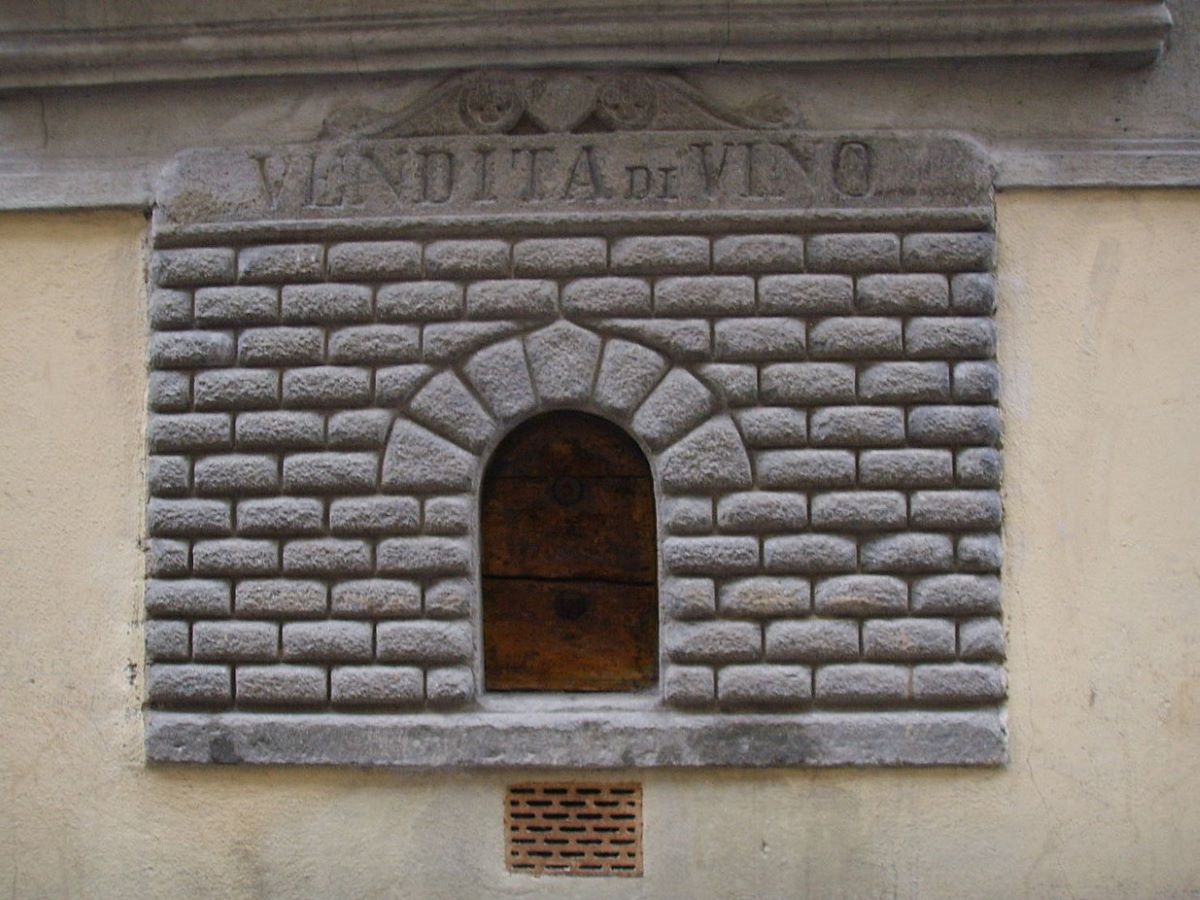
Wine windows (buchette del vino) originated in Florence way back in 1559. At this time, Duke of Florence Cosimo I de’ Medici allowed noble families to sell surplus wine from their vineyards directly from their city palazzos (palaces), tax-free and in small glass bottles called fiascos (flasks).
The earliest wine windows were cut out of large wooden doors, and were just big enough to pass a bottle through. Later, customized windows were built into the stone walls. Customers would knock on a little door covering the window or ring a bell, then the cantiniere, or wine steward, would fill the customer’s bottle or flask from the wine stored in cellars below.

Wine windows took on an even more important role during the bubonic plague that struck Florence in 1630. They allowed wine to be sold without direct contact that could spread disease. Not surprisingly, the Covid-19 pandemic in 2020 caused a resurgence in the popularity of wine windows.
The use of wine windows reached its peak in the 1700s, and the practice even spread to other parts of Tuscany and northern Italy. Nowadays, about 180 wine windows remain in Florence, and although not all of them are functioning. Only about 10 wine windows are currently open throughout the city.

Best Neighborhoods to Explore
The buchette del vino are all over Florence, but you can find most of them in the Santo Spirito neighborhood and the city center.
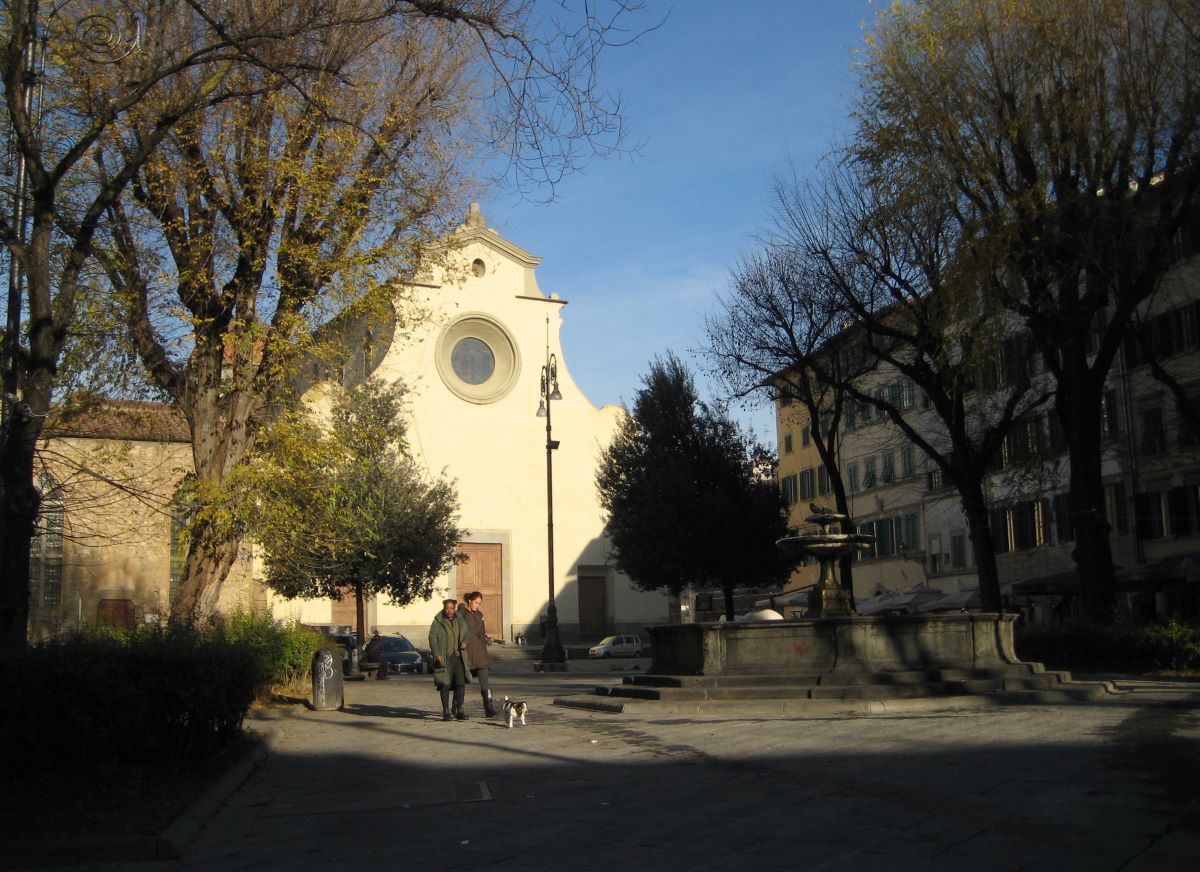
Santo Spirito
Santo Spirito has always been an area of nobles and artisans. Since wine windows are typically found in the walls of urban palaces, Santo Spirito is packed with these gems. This district is also known for being one of the hotspots of Florence’s nightlife.
Insider Tip: We recommend taking a leisurely walk through this beautiful part of Florence to enjoy the impressive architecture and go on a wine window treasure hunt.
City Center
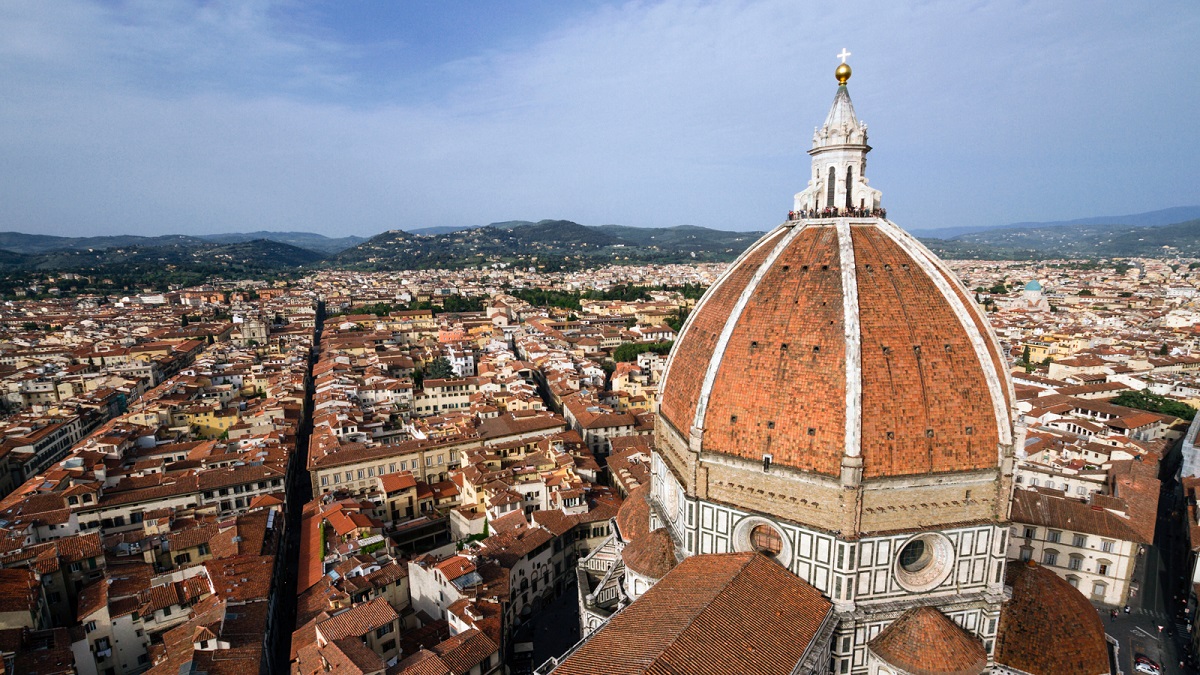
In the city center, you will find the wine windows of the most influential families in Florence, among which some still have a good reputation in manufacturing Tuscan wines.
This includes the Antinori, Frescobaldi, Rucellai, Verrazzano, and others. Since these palaces are still mainstays of Florence’s city center, finding their traditional little windows will not be difficult.
How to Order & What to Expect
Ordering from a Florence wine window (buchetta del vino) is simple and informal. Look for a small wooden or metal window at about waist height in the wall, then check for a menu or sign showing what is available. Depending on the location, you may need to knock or ring a bell to get the server’s attention.
- What to Order: Once the little door opens, you can order a glass of wine, Prosecco, a spritz, or another drink; some windows also serve small snacks. Most active windows have fairly small selection with a few house or Tuscan wines rather than a long wine list.
- Price: A typical glass of wine costs around €6-€8, although prices can be higher. Spritzes generally run around €8-€10.
- How to Pay: Pay through the window when your drink is served. Usually either cash or credit/debit cards are accepted, but payment methods vary by business. Carrying a little cash is still a good idea! Also, tipping is not customary.
- Takeaway + Seating Options: You may receive your wine in a regular glass or a takeaway cup, depending on the location. (Some windows have nearby outdoor seating, while others only offer takeaway.) If you are given a reusable glass, return it to the designated spot when you’re finished.
- Hours: There is no standard schedule for Florence’s wine windows because each one is operated by an individual business, so check the current hours before making a special trip.

Our Favorite Wine Windows in Florence
Babae
This restaurant specializes in breakfast and appetizers. Babea is perfect for enjoying the traditional experience of ordering your glass of wine through its little window at aperitif time. It was the first business to reopen its wine window in 2019.
📍 Location: Via Santo Spirito, 21R, 50125 Firenze FI, Italy
Osteria Belle Donne
This osteria is known for its elegant and refined style and for serving delicious typical Tuscan dishes. At Belle Donne, you can get your glass of wine from its little window to pair with its exquisite dishes on the terrace.
📍 Location: Via delle Belle Donne, 16R, 50123 Firenze FI, Italy
S-Malto Firenze
S-Malto is a pub that defines itself as a place of comfort beer and comfort food. Its atmosphere is ideal for enjoying a good beer with some friends. S-Malto Firenze offers the ultimate beer-friendly food such as hamburgers, pizzas, and other dishes to share. They use their wine window to sell their beers as well as their food.
📍 Location: Borgo dei Greci, 1/A, 50122 Firenze FI, Italy
Il Latini
This historical restaurant is one of the oldest in Florence, and the perfect spot to try Fiorentina steak, one of the most famous dishes in the region. Il Latini has an active wine window right by the entrance where you can get a bicchiere di vino while waiting for your table.
📍 Location: Via dei Palchetti, 6R, 50123 Firenze FI, Italy
Cantina dei Pucci
Located in the Palazzo Pucci, one of Florence’s most historic palaces, Cantina dei Pucci is the place where history and good gastronomy come together. It’s only fitting that they will have an active wine window! They offer a carefully curated wine list by the glass, which you can purchase through their buchetta.
📍 Location: Via de’ Pucci, 4 A, 50122 Firenze FI, Italy
Vivoli
This traditional Florentine gelateria is considered one of the best in the city. Like many other establishments, Vivoli reopened its wine windows in 2020 as a means of social distancing during the pandemic, but this time with gelatos.
📍 Location: Via Isola delle Stinche, 7r, 50122 Firenze FI, Italy
DiVin Boccone
Located in the traditional Santo Spirito neighborhood, DiVin Boccone is a gastronomic boutique that sells Tuscan food products and wine from its wine cellar. Its wine window has been the latest discovery by the Associazione Buchette del Vino. Since it has a particular shape and is different from the others, it was difficult to identify it.
📍 Location: Via delle Caldaie, 20, 50125 Firenze FI, Italy

Fishmood Modalità Pesce
Fishmod Modalita Pesce is a restaurant that was opened by a Pugliese family that decided to settle in Florence and increase the fresh fish offerings in the city center.
It is even said that the wine window in this building was where Leonardo Da Vinci used to buy his wines! Today you can get one of Fishmood’s sophisticated fish sandwiches directly from their wine window.
📍 Location: Piazza dei Peruzzi, 5R, 50122 Firenze FI, Italy
Map of Our Favorite Wine Windows
Curious to see where our favorite wine windows are? Check out the Google map below and have fun exploring!
Experience Florence’s Wine Windows on Tour with Us!
Want to upgrade your experience by exploring Florence alongside an expert guide? Join our Florence Food & Wine Tour to discover more local secrets and sample more of the city’s best bites!
Featured Review: Florence Food & Wine Tour
⭐⭐⭐⭐⭐ “This tour was excellent. Marilisa, our tour guide, was very knowledgeable about the food and community. She added a lot of extra information. The food was excellent too and there was plenty of it along with a lot of wine.”
– Kenneth
FAQs
What are Florence’s wine windows?
Florence’s wine windows are small openings in historic buildings used by winemakers to sell wine directly to customers during the 17th century.
Are wine windows in Florence still in use today?
Yes, a few wine bars and cafés have revived the tradition, using the windows to serve wine or espresso.
Can you buy wine from wine windows today?
Yes! While not as common, some places have brought them back for visitors looking for a taste of history.
What makes Florence’s wine windows unique?
Florence is the only city in the world with such a dense concentration of wine windows, making them a uniquely Florentine blend of history, architecture, and social innovation.