Last Updated on April 7, 2026 by Emma Fajcz | Published: February 8, 2020
Supplì and arancini: two words that are popping up on menus everywhere. They are both beloved Italian street foods, and are both fried. But what’s the difference between supplì and arancini and the history behind them? Roman supplì and Sicilian arancini are, on the crispy surface, quite similar, but they each reflect a unique culinary history, way of eating, and like everything in Italy: the story of a place.
Italian Fried Foods You Won’t Want to Miss
Italians love fried food. In Neapolitan pizzerias, there’s the frittatina di pasta (fried pucks of pasta). In Puglia, no Sunday is complete without homemade panzerotti (fried, stuffed pockets of dough). But two cousins, both fried balls of rice, stand out.
If you’re coming to the Italian capital soon, don’t miss out on these 5 street food bites in Rome (including but not limited to supplì)!
Supplì
Supplì are oblong and round-tipped, like a pill big enough for a T-rex. To make them, you always need pre-cooked, short-grain rice (often arborio or carnaroli, the same rice used for Italian risotto), mixed with grated cheese and whatever other flavoring you desire. In Rome, the rice is typically mixed with either plain tomato sauce or a light ragù with ground beef.
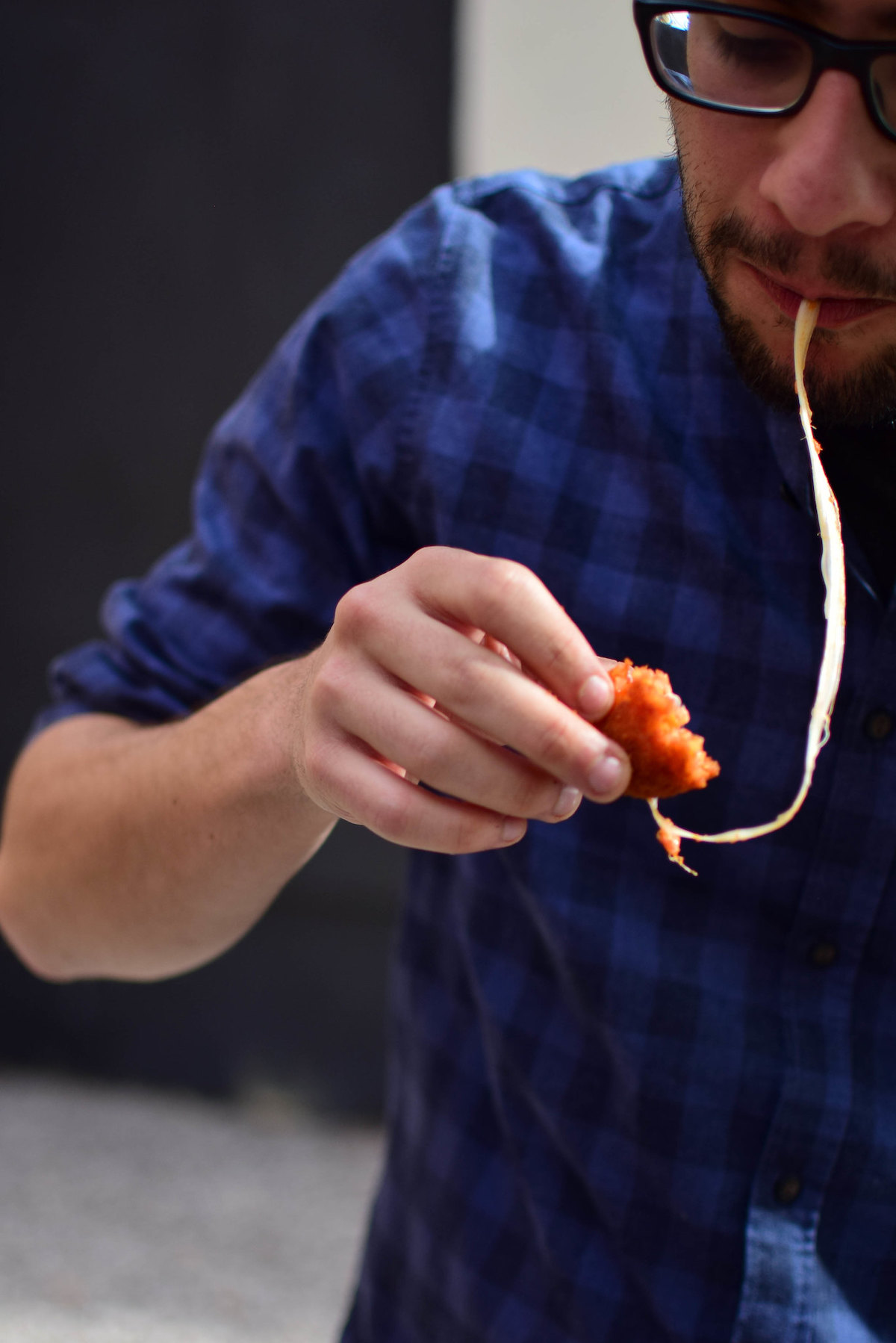
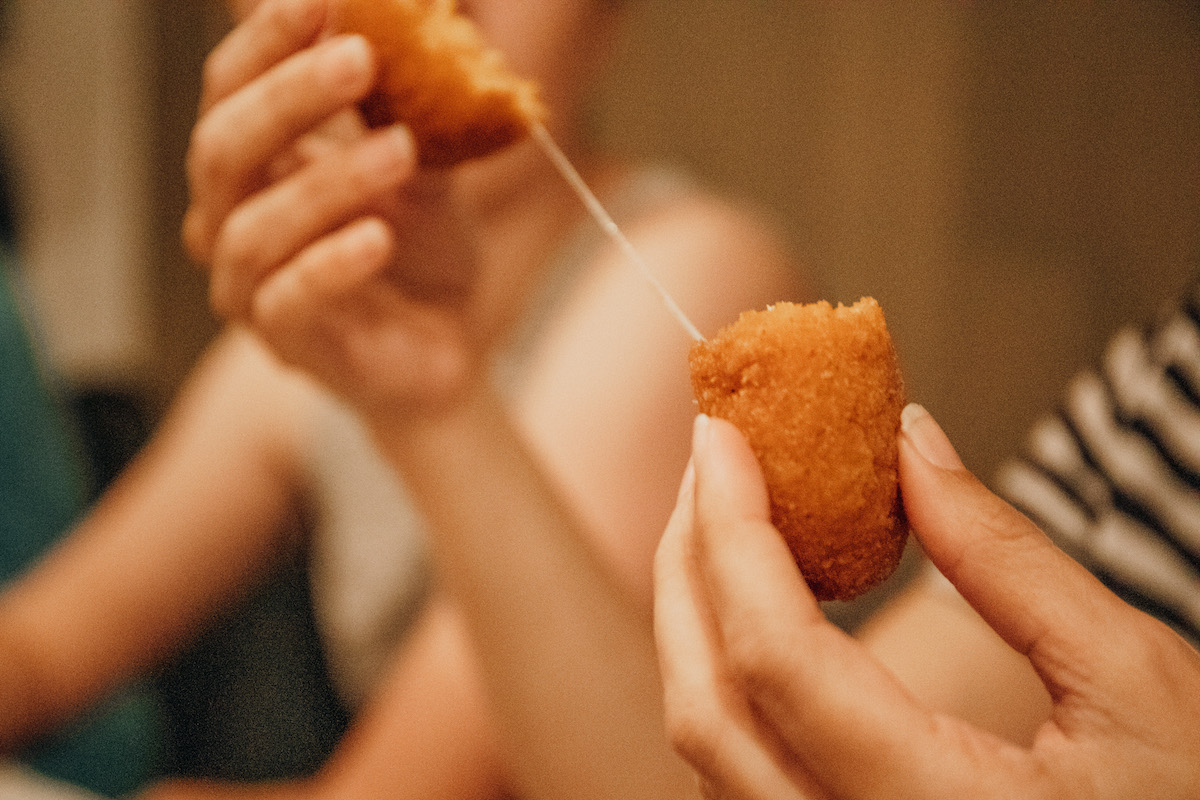
The most common embellishment is to prepare them al telefono, literally “telephone-style.” A small knob of mozzarella is enclosed in the rice before the little football is breaded and fried. The heat partially melts the mozzarella, so that when you crack open the supplì and pull the two halves apart, a wire of stretchy cheese connects them, like an old-fashioned telephone.

Who Invented Supplì?
So what’s the history of this dish? As with the fascinating history of mortadella, establishing the origins of any Italian dish often involves a leap into mythology.
Supplì seem to have originated as a street food in Rome in the early 19th century. Street vendors would park themselves on a corner with a kettle of oil and prepare “rice meatballs,” which were made both cheap and filling by the use of rice and a mixture of ground chicken livers and cheese instead of meat.
It was only later that supplì began to be served in restaurants and dedicated friggitorie, shops that only served fried food. Those shops have disappeared, and now supplì are served in sit-down pizzerias as an appetizer, or in slice-pizza joints as a quick snack (especially when the bars close).
Check out supplì in Rome with a Devour tour guide in this video below!
What Does Supplì Mean?
What about the name? Nobody knows, but there is a legend. When Napoleon occupied Rome, his troops were apparently very fond of these Roman fried rice balls. When they bit into them, they’d exclaim “que surprise!”, delighted by the gooey delights hidden by the crust. “Surprise” became “supplì” and the rest is … maybe not “history,” but it’s a nice story.
Arancini
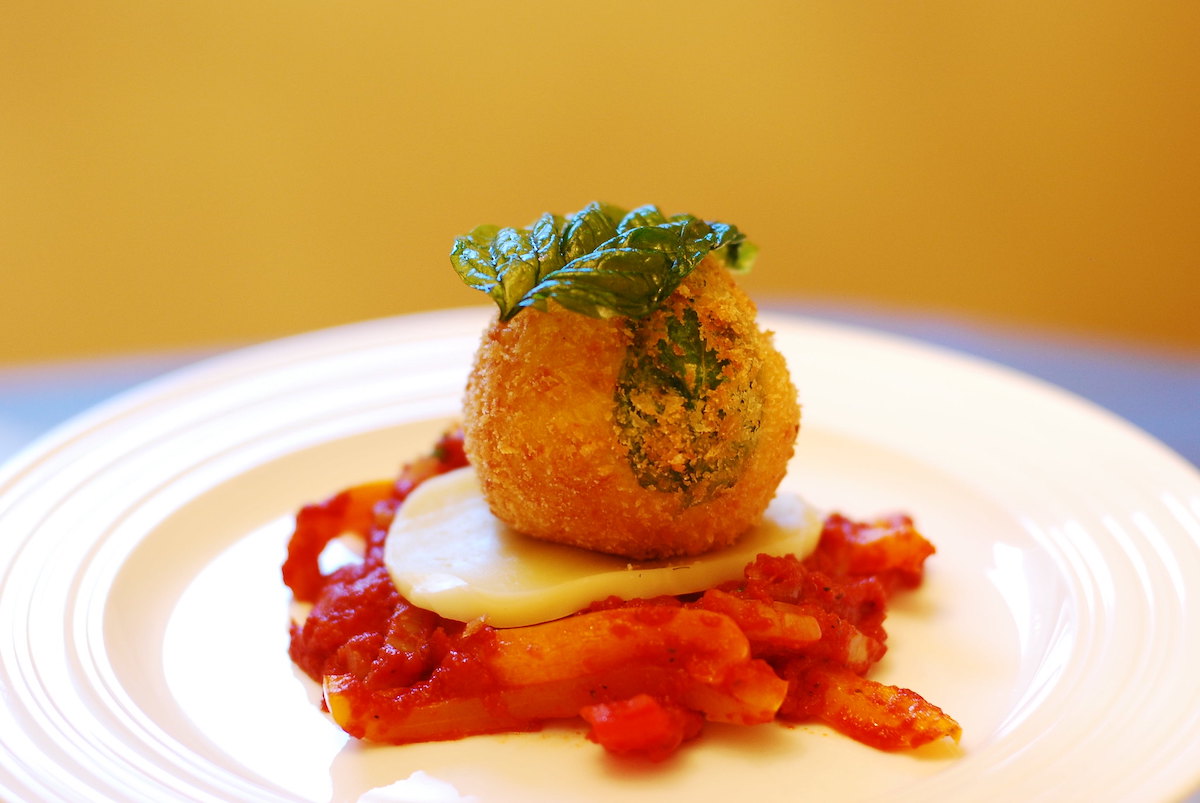
The differences between supplì and arancini are both ingredient-based and also historical. Arancini, along with cannoli, are an iconic food from Sicily. The name means “little orange,” but we’d hardly call them little. Arancini are about the size and shape of a softball, except for those produced in eastern Sicily, which are conical, in homage to Mount Etna, the famous volcano.
The preparation of arancini is similar to that of supplì. Cooked short-grain rice is used, there are a variety of different add-ins (like ragù or strong caciocavallo cheese), and the whole thing is bread-crumbed and deep fried.

Arancini or Supplì: Which Is Better?
There are two big differences, though. Arancini are usually much bigger than supplì, about double the size. Arancini are also often stuffed with ragù (or peas or prosciutto), rather than having it mixed with the rice. An arancino’s layers are quite beautiful. The crust is straw-gold, and beneath that is a layer of deep-yellow rice, colored by a pinch of saffron. The rice contains a core of dark-red meat sauce, which spills out onto your plate (or more likely your shoes while walking down the street).

A Bite of Arancini History
Arancini seem to have much deeper origins than supplì. The 10th century Arab conquest of Sicily brought rice and saffron to the island. Peasants would mix leftover rice with whatever else they had on hand into balls, fry them, and eat them for dinner. The round balls recalled the omnipresent oranges that grow on the island, and so the same was born.
Where to Try Arancini and Supplì
Arancini are, paradoxically, more and less regional than supplì. Within Sicily, each city prides itself on its particular preparation and filling. Between Palermo and Catania, they can’t even agree on the gender of the name (the former uses the feminine arancina, the latter the more-common masculine arancino).
In Sicily, arancini are still sold as a one-in-all meal in bars and fry-shops, rather than as an appetizer in restaurants. The Sicilian diaspora, however, has made arancini a fixture in worldwide Italian communities.

Supplì, on the other hand, remain a mostly Roman delicacy, although some modern chefs are beginning to put them on menus in other areas. In fact, some restaurants will have a “special” supplì in addition to the classic al telefono.
Once, at a Roman pizzeria, we enjoyed an unforgettable “Roman Countryside” supplì made with porchetta, fennel pollen, and local Frascati white wine. If you’re traveling to Rome, make sure you try this iconic bite!
Experience Rome’s Cuisine with a Local
As you can see, eating in Rome is delicious and exciting. If you really want to take things up a notch and live like a born-and-bred Roman for a full morning, come join us on our Ultimate Rome Food Tour with Testaccio Market. From a bustling local market to a timeless trattoria and more, you’ll experience the spots that form the heart and soul of Rome—all while devouring plenty of tasty local bites along the way.

Featured Review: Ultimate Rome Food Tour with Testaccio Market
⭐⭐⭐⭐⭐ “What an amazing way to learn about Roman food! Guilia was fantastic and the variety and volume of the foods we tried was great! I’m so full! I would highly recommend to anyone visiting Rome. So good to get out of the tourist packed areas and see an authentic part of Rome.”
– McKayEntourage on Tripadvisor
Supplì vs Arancini FAQs
What is the difference between supplì and arancini?
The main difference is where they come from and what is inside them. Supplì are a Roman street food usually made with tomato-flavored rice and stuffed with mozzarella, while arancini come from Sicily and are often filled with ragù, peas, or cheese. Supplì are typically oblong, while arancini are either round or cone-shaped.
Are supplì and arancini made with the same rice?
Both are usually made with short-grain Italian rice such as Arborio or Carnaroli, but the preparation method is different. Supplì rice is often cooked in a tomato sauce before being shaped and fried, while arancini rice is commonly flavored with saffron.
Why are supplì called “supplì al telefono”?
Supplì al telefono get their name from the long strand of melted mozzarella inside. When you pull one apart, the cheese stretches between the two halves like an old-fashioned telephone wire.
Which is bigger: supplì or arancini?
Arancini are usually larger than supplì. Sicilian arancini are often large enough to eat as a meal or substantial snack, while Roman supplì tend to be smaller and are usually served as an appetizer or quick street food bite.
Can you find both supplì and arancini in Rome?
Yes, but supplì are much more common in Rome because they are a traditional Roman specialty. You may still see arancini in Sicilian restaurants around the city, but if you want the authentic local version, order supplì.