Last Updated on August 6, 2026 by Emma Fajcz | Published: January 25, 2019
From ancient artifacts to the new snacks on the block, Rome’s street food scene bursts with flavor and history. Rome swarms with everything from the classic take-away pizza slice to modern creations. Here’s a guide to 5 Roman street food favorites to help you navigate the Eternal City’s vibrant street food scene. Whether you want cheap eats or classic bites, you’ll find plenty of tasty options!

Table of Contents
At a Glance: Eating Street Food in Rome
- 🍕 Must-Try Roman Street Foods: Don’t leave Rome without tasting supplì (fried rice balls), pizza al taglio (pizza by the slice), trapizzino, porchetta sandwiches, and artisanal gelato. (Here’s everything you need to know about pizza alla romana!)
- 📍 Where to Find the Best Street Food: Some of Rome’s best street food is found in neighborhoods like Testaccio, Trastevere, Campo de’ Fiori, Monti, and around Mercato Testaccio. Venture a few streets away from the busiest tourist landmarks for better quality.
- 💶 How Much Does Street Food Cost? Street food is one of the most affordable ways to eat in Rome. Expect to pay about €2-5 for pizza or supplì, €5-8 for a trapizzino or sandwich, and €3-5 for a small gelato.
- ⏰ When Is Street Food Available? Most bakeries and pizza shops open by late morning and serve throughout the afternoon, while fried-food shops and sandwich counters stay busy through lunch and into the evening. Gelaterias are open year-round, often until late at night, and many Romans enjoy street food as a quick lunch, afternoon snack, or late-night bite.
- 🚶 How Locals Eat: Romans often grab street food standing at a counter, or enjoy it while strolling between neighborhoods. Trying street food is one of the best ways to experience the city’s food culture.
- ✅ Local Tip: Cards are widely accepted at restaurants, gelaterias, and street food vendors. Italian law requires businesses to accept electronic payments, so paying by card is common. However, some vendors may require cash for small purchases.

Supplì
The supplì reigns as the king of Roman street food. Locals have loved these easy-to-eat, deep-fried rice croquettes for over 150 years.
Although similar to Sicilian arancine, supplì remain unique. The most classic version features rice filled with ragù (meat sauce), but you will also find vegetarian options.
Supplì al telefono contain a mozzarella center. When you bite into one, gooey cheese stretches out like old telephone wires. People make these bites by following traditional recipes passed down for generations.
📍 Where to Get It: Award-winning chef Archagelo Dandini offers his take at Supplizio, near Campo dei Fiori. For a more rustic experience, visit Casa del Supplì, with locations near San Giovanni and Trastevere. If you want to try different kinds, food markets like Mercato di Testaccio always deliver.
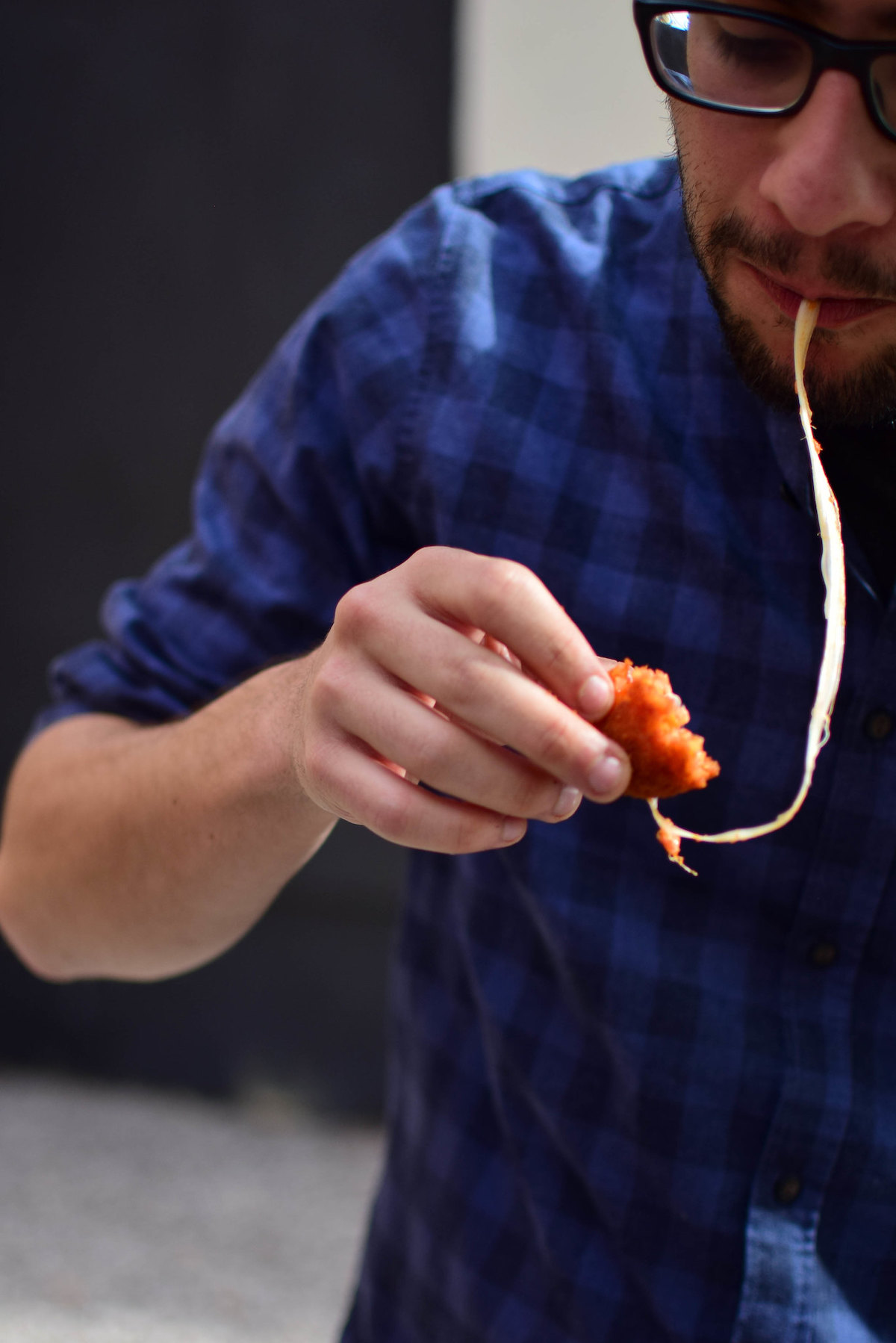
Tiny balls of fried cheesy goodness? Supplì will steal your heart! Photo credit: Evelyn Hill
Trapizzino
The trapizzino combines traditional Roman flavors with the modern street food craze. It’s a triangular pocket of pizza dough, stuffed with fillings such as meatballs, melanzane alla parmigiana (baked eggplant with caciocavallo cheese), pollo alla cacciatora (chicken in tomato sauce), or tongue in salsa verde (parsley pesto).
Pizzaiolo Stefano Callegari invented the trapizzino in 2008. Now, you can find it as far away as New York City!
📍 Where to Get It: Grab a trapizzino at Trapizzino at Piazza Trilussa 46, which also serves as a Trastevere wine bar. Another option sits inside the Mercato Centrale at Termini train station—perfect for a quick bite before or after a train journey. These options work well for a snack on the go or as a stop during a street food tour.

Carciofi alla Giudia
This dish dates back at least 500 years. Originally, people only made it in Rome’s Jewish ghetto, but now you’ll find it all over the city. The dish features artichokes that are flattened and deep fried.
As you eat, you crunch through the crispy outer leaves, like potato chips, to reach the soft, meaty center. You will spot them on restaurant menus as starters and as street food.
📍 Where to Get It: Try the street-food version at Food Box, in the trendy Mercato di Testaccio. Kosher restaurants around Via del Portico d’Ottavia also serve this dish as a starter. Markets like these let you explore the diversity of Roman cuisine.

Pinsa
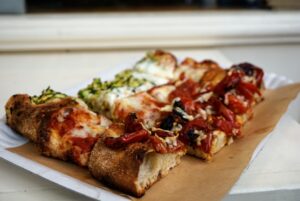
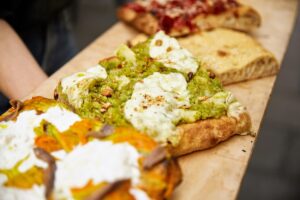
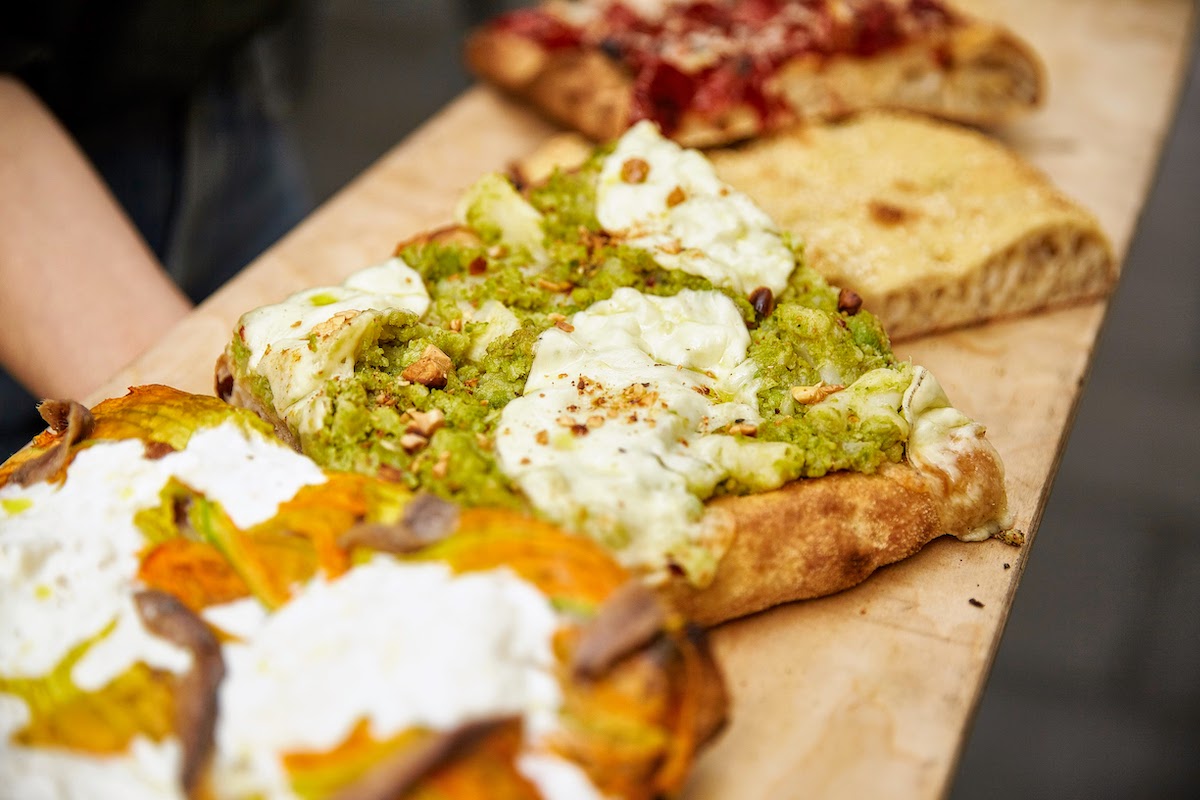
Pinsa is more than just the Roman word for pizza. The dish likely comes from Ancient Rome, and differs greatly from Neapolitan pizza.
First, bakers use a blend of wheat, soya, and rice flours. Next, the dough’s high hydration (75%) makes it easy to digest. Bakers let it rise naturally for 48–72 hours. Another unique trait is its elongated oval shape. Recently, Romans have rediscovered pinsa, and it’s now a must-try for fans of traditional recipes.
📍 Where to Get It: You will find many shops offering la vera pinsa Romana. Pinsa ‘mpò, near the Vatican, works well for a Roman lunch on the go, while Domus Pinsa near the Pantheon offers a sit-down pinseria experience and boasts dough that rises for 120 hours.
Porchetta
Porchetta—whole roast pig stuffed with garlic, rosemary, and fennel—features all over Italy and in Rome’s street food scene. Vendors slice juicy meat and crispy crackling to serve in a bun, creating the tastiest Italian sandwich imaginable.
You will spot porchetta trucks at every Italian market and festival. These sandwiches provide a real treat. Fortunately, Rome offers several places to satisfy your cravings every day. Football fans can always find porchetta vans around the Stadio Olimpico when Roma or Lazio play.
📍 Where to Get It: Before or after a Vatican Museum visit, stop by Angrypig. On the other side of the Tiber, Il Panino Ingegnoso offers delicious porchetta sandwiches and stays open late.

Want to Make Authentic Roman Pizza?
You’re invited to a Roman dinner party you help cook! Save your place in our Rome Pizza Making Class where you’ll step into a cozy kitchen in the heart of Trastevere with a local chef and learn to make Roman pizza the authentic way.
Start with a glass of prosecco or a spritz, then create your own pie and prepare classic tiramisù before gathering around the table for a relaxed meal with unlimited wine, beer, and great conversation. This is a night you’ll talk about long after the last slice!

Featured Review: Rome Pizza Making Class
⭐⭐⭐⭐⭐ “My Husband and I took this class as a part of our honeymoon and we had the most amazing time on our class with Gianmaria! He was incredibly welcoming, knowledgeable and held a great class…We would 100% recommend coming and taking a class here whether its the pizza class we took or one of their other classes focusing on pasta or gelato; it’s an incredible experience that won’t disappoint!”
– Alyssa
Roman Street Food FAQs
Where can I find the best street food in Rome?
You will find the best street food at bustling food markets like Mercato di Testaccio and Mercato Centrale. Local bakeries and dedicated street food shops also serve excellent bites. For a deeper experience, join a street food tour and sample a range of cheap eats.
Is street food in Rome expensive?
Street food in Rome stays affordable and delicious. Most snacks, like supplì, pizza al taglio, and porchetta sandwiches, cost little. You can try many flavors without breaking the bank.
Are there vegetarian options for Roman street food?
Absolutely! Many traditional recipes offer vegetarian versions, such as supplì with mozzarella, pinsa topped with vegetables, and carciofi alla giudia. Food markets usually have a wide selection to suit different dietary needs.
What is a street food tour, and is it worth it in Rome?
A street food tour is a guided walk where you sample different street foods while learning about their history and cultural significance. In Rome, these tours are a fun and tasty way to discover hidden gems and experience the best of Roman cuisine.