Last Updated on May 19, 2026 by Emma Fajcz | Published: November 29, 2018
Even if you’re staying in Lisbon for only a short time, you want to feel deeply connected with the city, and part of that connection comes through food. These 6 tips to eat like a local in Lisbon will help you understand the local culture and blend in with the eating habits of Lisboetas. Here’s everything you need to know to eat like a local and to have fun tasting your way through Lisbon!
Table of Contents
1. Sit to Eat Lunch
At a table or the counter, Lisboetas sit to eat no matter how quick the meal. Workers get one hour to lunch and they make the most of it around the table. Here they’ll discuss politics, another coworker, the state of the health system, more politics, education, the latest gossip, and, especially on Mondays, last Sunday’s football match if they’re hardcore fans.

2. Know What A “Quick Meal” Really Means
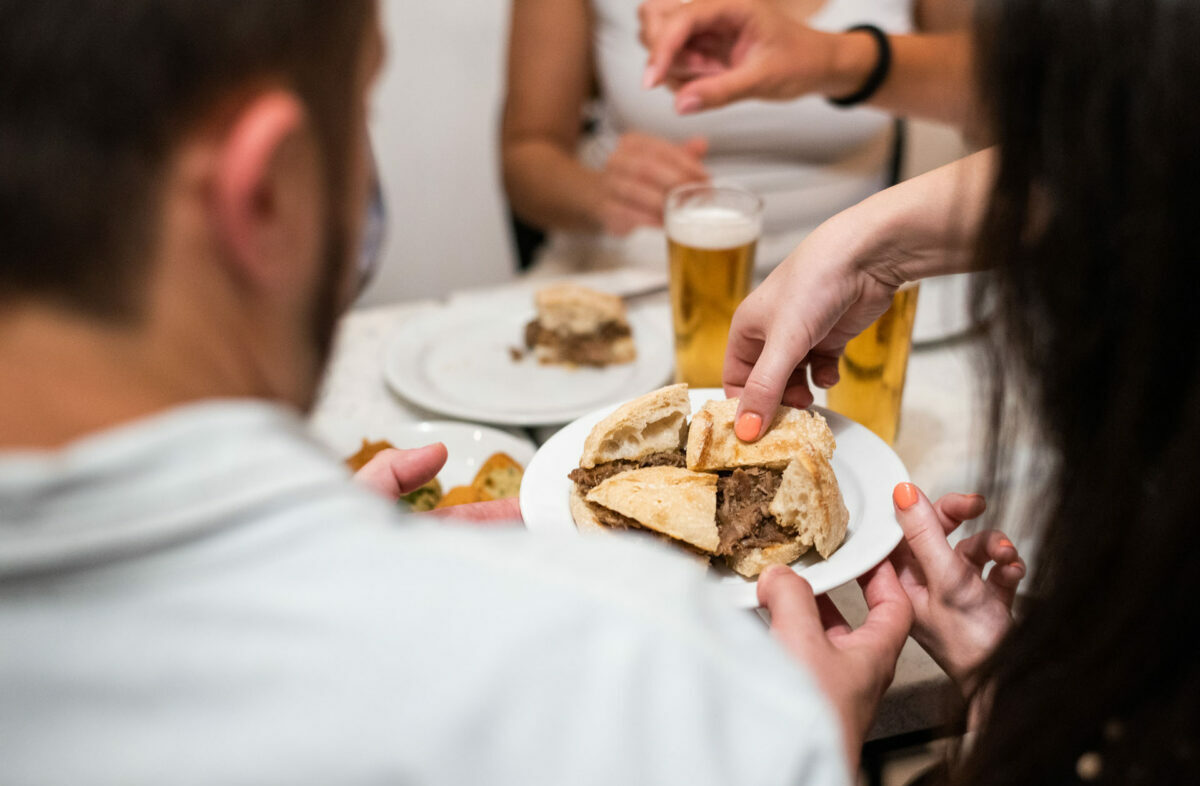
A sandwich for lunch? Not unless it’s a bifana sandwich or a prego, and you’re in the mood for Lisbon street food.
If a local is having a sandwich for lunch at a restaurant, then it’s most likely complemented by a bowl of soup. A “quick meal” by Lisbon standards is the middle ground between fast food and a prolonged dinner. It’s a dish that’s part of the daily specials and ready to go, may be part of a menu that includes a drink and a coffee, and requires swift service. Always at the table, of course.
3. Go for the Lunch Menu
Portuguese in the big cities eat out for lunch on weekdays. Workers get an additional daily bonus to their income to cover lunch expenses and most prefer to eat out. Packing a meal was a trend during the 2011-2015 economic crisis, but you’ll notice it less now. Besides, with such great weather most of the year, who wants to be stuck at the office for an extra hour?
Most tascas in Lisbon and snack bars (cafés that also serve quick meals) are strategically located near office buildings and all have their version of lunch menus. They cost under €10 and include one main dish that you can pick from the specials’ list, a drink, sometimes a salad or soup, and a coffee. Dessert is usually optional, and alcoholic drinks aren’t included.
Insider Tip: When in doubt where to eat a good and affordable lunch, choose the place with the most “suits” between noon and 3 pm.

4. Special Occasions Are What You Make of Them
Going out to dinner with friends or family to celebrate a special occasion is common. The range of what “special occasions” mean for the Portuguese is wide. It can be a birthday, a farewell party, or just getting a group of friends together that miss each other. It can also mean trying out a new restaurant. The point is to find an excuse to share a meal, and it’s never too hard to find one.

5. The Portuguese Art of “Petiscar”
Portuguese have whole meals just with petiscos and drinks. These can go on for hours unless it’s a busy restaurant and the waiter is desperate to free a table. First, choose a place with the best petiscos in Lisbon; then, prepare to order and share. We at Devour suggest you try every petisco on the menu, and then order a second dose of your favorites. Food (almost) becomes secondary as conversations at the table take over.
6. Don’t Overthink the Food, but be Picky
Lisboetas look more for the price/quality balance than a menu that wows them. Of course, if a restaurant gets both things done right, they’ll forever recommend it to friends, family members, and any tourist who might ask them for a nice place to eat. Flavor matters, respect for food matter, and the quality of the ingredients matter.
There’s a pickiness that’s best observed at pastelarias and bakeries. Pay close attention to local customers. Before ordering, they’ll carefully browse the pastry-filled refrigerated counter (or the bread on shelves if it’s a bakery). Some are less vocal, so they’ll press their finger against the window pointing to the exact pastry they want. Others are more explicit and they’ll describe in detail not just the pastry they want but how they want it.
Insider Tip: To understand the “more cooked” or “less cooked” level, the employee will usually pick up one of the pastries with a tong, rotate it in different angles so the client has a better look, and only after it passes all the tests is the pastry served. It may sound exhausting, but the client gets exactly what they want.

Want to Eat Like a Local in Lisbon?
Eating like a local truly goes a long way in taking your travel experience from “good” to “great.” On our Ultimate Lisbon Food Tour, we’ll skip the tourist traps and head off the beaten path into some of the city’s last remaining truly authentic neighborhoods. There, you’ll sample countless beloved bites at the family-run places that have been making them for generations, and come away with a deeper understanding of Portuguese food culture.

Featured Review: Ultimate Lisbon Food Tour
⭐⭐⭐⭐⭐ “From the warm greeting to the goodbye the time just flew. Helena was the perfect guide with great stories and information including her family experiences and all the tastings were in lovely locations with traditional Portuguese food and drink – highly recommended introduction to Lisbon.”
– Peter
Eating Like a Local in Lisbon FAQs
What time do locals eat in Lisbon?
Locals in Lisbon typically eat lunch between 1-3 pm, and dinner after 8 pm, with many restaurants filling up closer to 9 pm. Eating later is an important part of Portuguese dining culture.
What foods should you try to eat like a local in Lisbon?
To eat like a local in Lisbon, try dishes such as bacalhau (salt cod), bifana sandwiches, grilled sardines, arroz de marisco, and pastéis de nata. Traditional tascas and neighborhood restaurants are often the best places to experience authentic Portuguese cuisine!
What is a tasca in Lisbon?
A tasca is a traditional Portuguese tavern or casual neighborhood restaurant serving simple, homemade dishes at affordable prices. Tascas are popular with locals because they focus on hearty food, house wine, and relaxed dining rather than tourist-oriented menus.
Do you tip at restaurants in Lisbon?
Tipping in Lisbon is appreciated, but not mandatory. Most locals round up the bill or leave around 5-10% for good service, especially at sit-down restaurants. Tipping with small change is common in cafés and casual spots.
How can you avoid tourist restaurants in Lisbon?
To avoid tourist-trap restaurants, look for places filled with locals, menus written primarily in Portuguese, and restaurants situated slightly away from major attractions. Exploring less-frequented neighborhoods like Campo de Ourique, Madragoa, and Graça can also lead to more authentic dining experiences.









Good advice that most Europeans would probably find funny and unnecessary, as I do. But the more Americans heed it, the happier everyone will be, thank you!
Thanks for reading, Werner!