Last Updated on June 10, 2026 by Emma Fajcz | Published: September 8, 2020
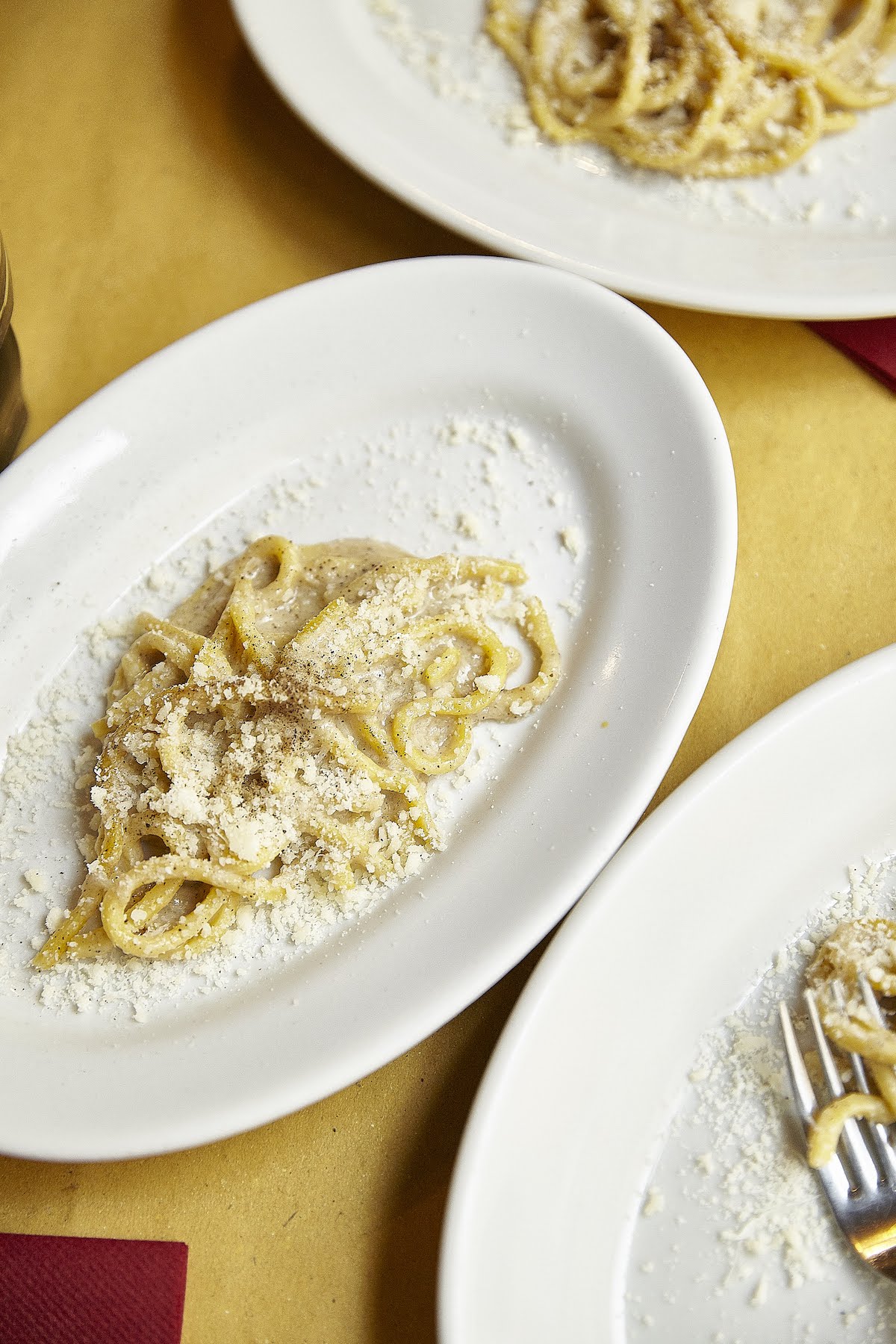
Cacio e pepe is the classic flavor of Rome, and one of its best and most beloved dishes. There are dozens of restaurants with good renditions, especially of simple pasta cacio e pepe. Here’s 4 places for the best cacio e pepe in Rome, covering traditional options and modern twists that you’ll love.

Table of Contents
All About Cacio e Pepe in Rome
- What does cacio e pepe mean? Cacio is Roman dialect for “cheese” (in this case, assertive sheep’s-milk pecorino romano), and pepe is black pepper.
- Classic Dish of Cucina Romana: Pasta is tossed with handfuls of cheese, a mouth-tingling amount of pepper, and a bit of the pasta water to create a creamy sauce.
- Traditional Favorite & New Twists: This dish started as the creation of hungry shepherds working in the Roman countryside, but now it’s everywhere in the Eternal City—and not only the standard pasta-based version. There’s cacio e pepe pizza, chips, ravioli…you name it!

Lo’steria
A simple, modern restaurant in the chic Ponte Milvio neighborhood, Lo’steria specializes in classic Roman fare, flawlessly executed at low prices.
Their version of cacio e pepe is simply perfect. Chewy tonnarelli (a long, square-ended pasta that’s the most common shape for cacio e pepe) are tossed with an enormous amount of strong pecorino and roughly crushed pepper, and loosened with pasta water until the pasta is completely coated.
Yes, it’s rich, but it’s also so spicy and sharp that you’ll eat every tonnarello, and then use a heel of bread to scrape the slightly-coarse, cheesy pudding off the bottom of the plate.
Want to explore the neighborhood around Lo’steria? Here’s our guide to the Ponte Milvio neighborhood!
📍 Address: Via dei Prati della Farnesina, 61

Da Cesare al Casaletto
One of Rome’s most lauded (and busiest) restaurants, Da Cesare al Casaletto makes a very good plate of standard cacio e pepe. We’re putting it on our list, however, for their unique, addictive gnochetti fritti alla cacio e pepe.
Miniature potato gnocchi are fried and then placed on a platter smeared with a cream of pecorino and pepper (what normally you’d stir into hot pasta). The combination of hot, crisp dough and cool, smooth sauce is at once uniquely Roman and just plainly delicious.
Fair warning: the appetizer portion is large and filling. Split it with friends or else your roast lamb will arrive and immediately need to be put into a doggy bag.
📍 Address: Via del Casaletto, 45

Sbanco
One of three sit-down pizzerias owned by Stefano Callegari, best known as the inventor of the Trapizzino, Sbanco serves whole pies, chewy and risen, with all the usual and unusual toppings. But it’s best known for its cacio e pepe pizza.
A circle of dough is baked with crushed ice on top, which keeps the surface soft and pliable, and then drenched with a heady mixture of pecorino and black pepper when it comes out of the oven.
The underlying layer, where the ice was, becomes creamy, but the top remains dry and crumbly. The final product perfectly imitates the taste and texture of the classic pasta, where the pecorino is first emulsified into a sauce and then sprinkled on top.
Local’s Tip: Sbanco is the most centrally-located of the three pizzerias. But you can also get the cacio e pepe pizza at Sforno and Tonda.
📍 Address: Via Siria, 1

Da Danilo
Da Danilo in the Esquilino quarter has one of the most famous—and delicious—versions of cacio e pepe in town.
At Danilo, the server doesn’t just bring you a plate of pasta; they bring a tire-sized wheel of hollowed-out pecorino to your table! In go the hot, al-dente tonnarelli, still dripping with starchy water from the pot, covered with giant pinches of pecorino and pepper.
The server takes their tongs and vigorously stirs the ingredients together. All the while, they’re making sure to scrape the interior sides of the cheese wheel and toss the pasta up and down so that the end result is airy rather than dense.
Onto the plate it goes, with a fresh grate of cheese and twist of pepper on top. Only then can you eat. One bite, packed with that classic “sheepy” flavor and zesty with pepper, and you understand why Romans love cacio e pepe so much.
📍 Address: Via Petrarca, 13

Discover Our Favorite Cacio e Pepe on Tour!
There’s one more spot serving the best cacio e pepe in Rome that we want to keep a secret. But join us on our Ultimate Rome Food & Testaccio Market Tour and you’ll discover it for yourself. (And yes, we try the famous cacio e pepe.)
Featured Review: Ultimate Rome Food & Testaccio Market Tour
⭐⭐⭐⭐⭐ “What an incredible experience we had. The food was fantastic and our tour guide, Chiara T, was the best. Highly recommend her and the tour.”
– Carol
Best Cacio e Pepe in Rome FAQs
What is cacio e pepe?
Cacio e pepe is one of Rome’s most iconic pasta dishes, made with just a few simple ingredients: pasta, Pecorino Romano cheese, black pepper, and pasta water. Despite its simplicity, achieving the perfect creamy sauce requires skill and technique, making it a hallmark of Roman cuisine.
Where can you find the best cacio e pepe in Rome?
Many of Rome’s best cacio e pepe dishes are served in traditional trattorias throughout neighborhoods like Trastevere, Testaccio, Monti, and the Historic Center. The best restaurants focus on using high-quality Pecorino Romano, freshly cracked pepper, and top quality pasta.
Is cacio e pepe the same as alfredo pasta?
No. While both are cheese-based pasta dishes, cacio e pepe is a traditional Roman recipe made with Pecorino Romano and black pepper, whereas alfredo sauce is made with butter and Parmesan cheese. Cacio e pepe has a sharper, more peppery flavor and a lighter texture.
What does cacio e pepe mean in Italian?
Cacio e pepe literally translates to “cheese and pepper.” The name reflects the dish’s simple ingredient list and its origins as a humble meal enjoyed by shepherds and workers in the Roman countryside.
What other Roman pasta dishes should you try besides cacio e pepe?
Visitors should also try Rome’s three other classic pasta dishes: carbonara, amatriciana, and gricia. Together with cacio e pepe, these four recipes form the foundation of traditional Roman pasta cuisine and are must-try dishes for food lovers visiting the Eternal City.







You missed the unique cacio e pepe by Monte Caruso Cicilardone. It really deserve a visit…
Another excellent option! There’s so many great spots for cacio e pepe in Rome!