Last Updated on April 16, 2026 by Emma Fajcz | Published: May 18, 2020
Barcelona is the perfect city to explore on foot, as even a short stroll can take you through six centuries of architecture. Going on a Gothic Quarter walking tour allows you to experience the city’s fascinating history and hidden gems. Its winding streets, towering stone buildings, and unique shops and storefronts all have stories to tell from the city’s past. It’s so easy to take a fun and educational self-guided walking tour of Barcelona’s Gothic Quarter with our handy insider knowledge!
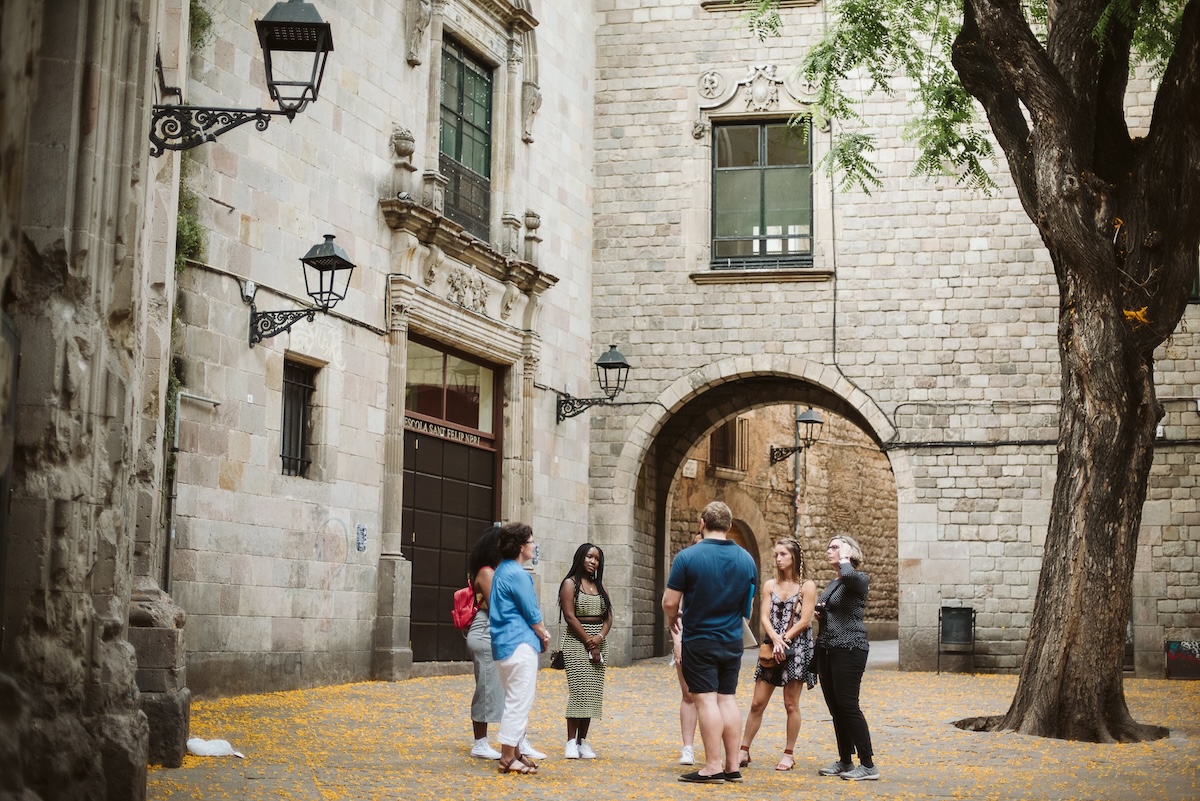
Discover Plaça Nova and the Cathedral
No trip through the Barri Gòtic would be complete without a visit to the Cathedral of Barcelona in Plaça Nova. Start your Gothic Quarter tour here by taking a walk around this imposing structure and then look up. In addition to traditional gargoyles on the roof, you’ll also find curious animals like unicorns and elephants.
Construction of the cathedral took place between the 13th and 15th centuries, but it got a facelift for the World Expo in 1888. If you walk around the right-hand side, you’ll see that its façade stops abruptly. This is because the city decided to save money by only renovating the parts of the building that would appear in photos.
The cathedral is beautiful inside as well. There are a variety of ticket options depending on what you want to see and do once inside.
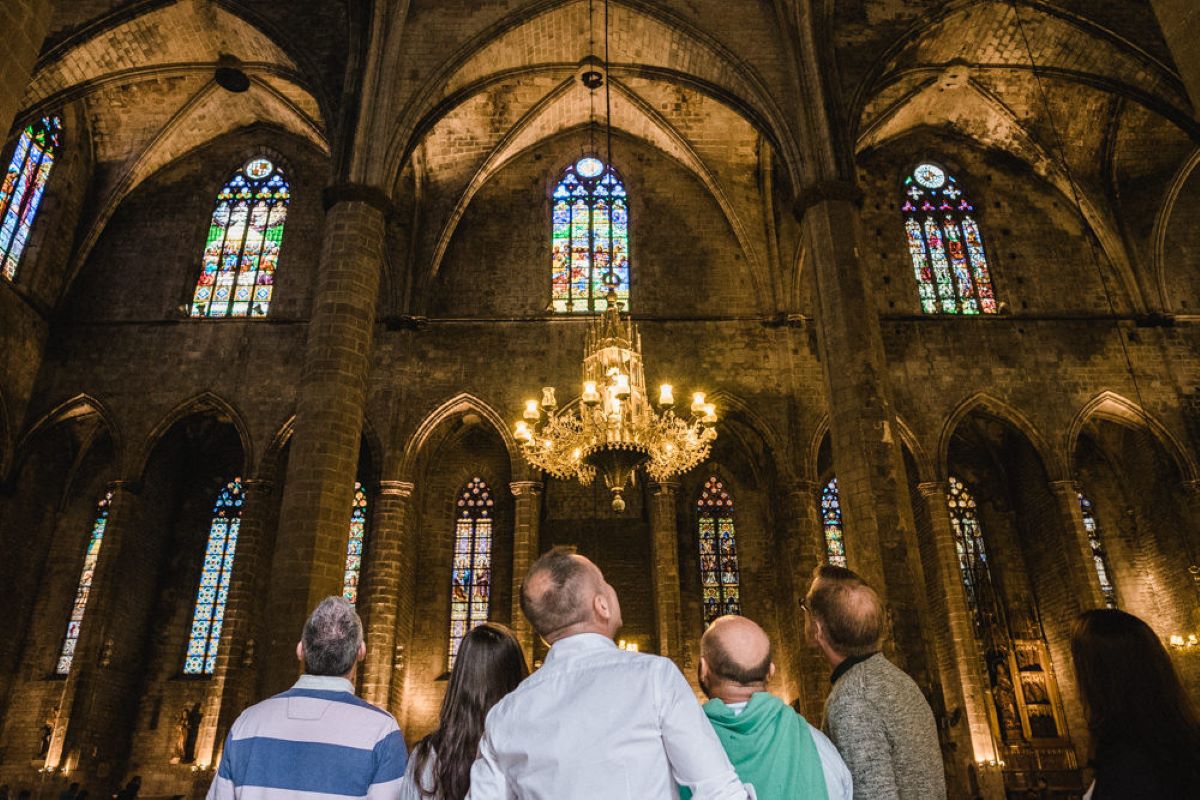
Plaça de Sant Josep Oriol and Plaça del Pi
From Plaça Nova, head down Carrer de la Palla and sneak your way through the iconic narrow streets of the Gothic Quarter. After a few minutes, you’ll enter Plaça de Sant Josep Oriol.
This lovely square is home to the Basilica de Santa María del Pi. In years past, the wealthy residents of Vila de Gràcia would go to church here. While they worshiped, their drivers would hang out at Bar del Pi. This place has been open since the 1920s and previously served as a stable in the 18th century. In the 1930s, the Unified Socialist Party of Catalonia was founded here.
The masses gather at Plaça del Pi during the La Mercè festival to watch castellers climb and weave together to make impressive human towers. In addition to its colorful history, Bar del Pi is the perfect place to stop for tapas and a glass of vermouth or cava.
Plaça del Pi has plenty more to offer:
- If you’re lucky, your visit will coincide with the artisanal food market held here.
- Otherwise, grab something sweet at Granja Dulcinea (Calle de Petritxol, 2). Opened in 1941, this is one of the best places for chocolate in Barcelona.
After your sugar fix, head to the far side of Plaça de Sant Josep Oriol. Take Carrer de l’Ave Maria, then head down Baixada de Santa Eulàlia.
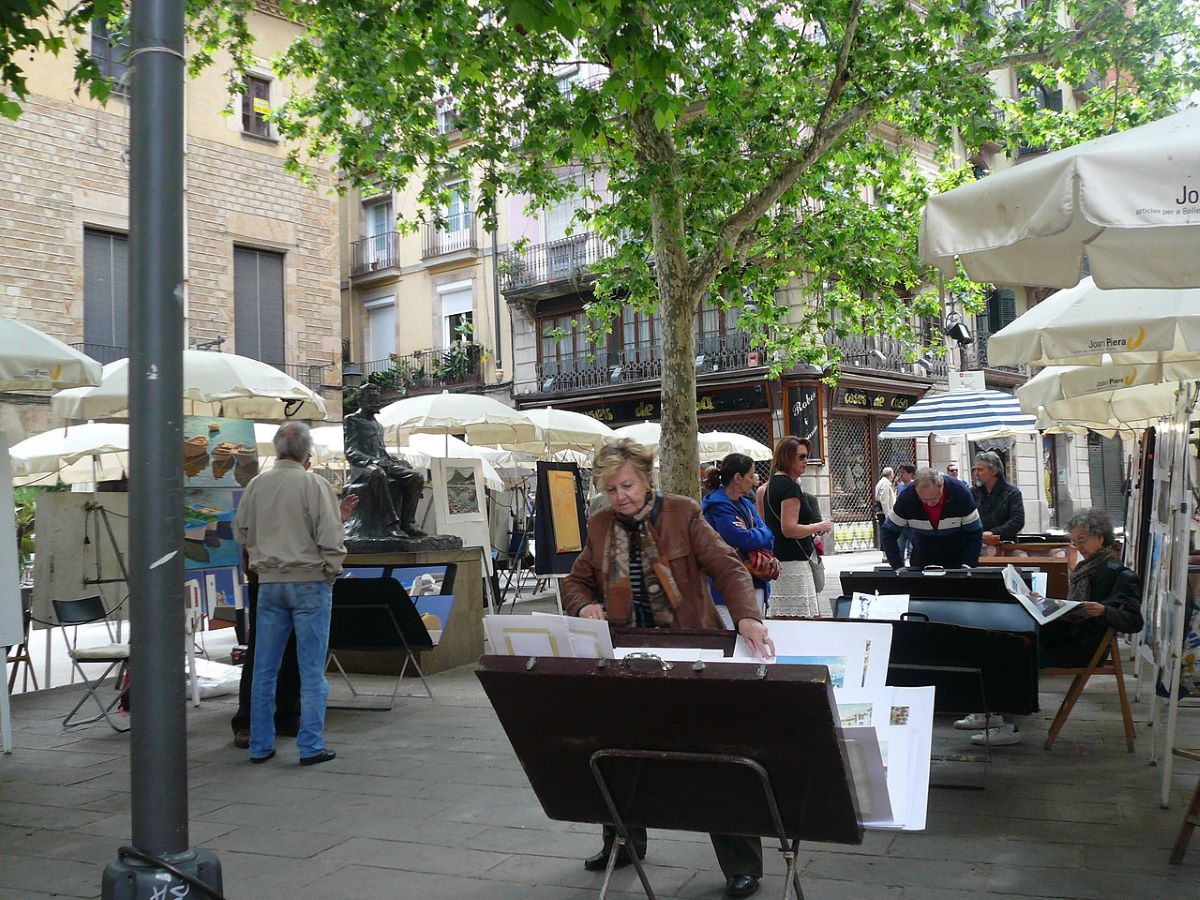
Take a Moment at Plaça de Sant Felip Neri
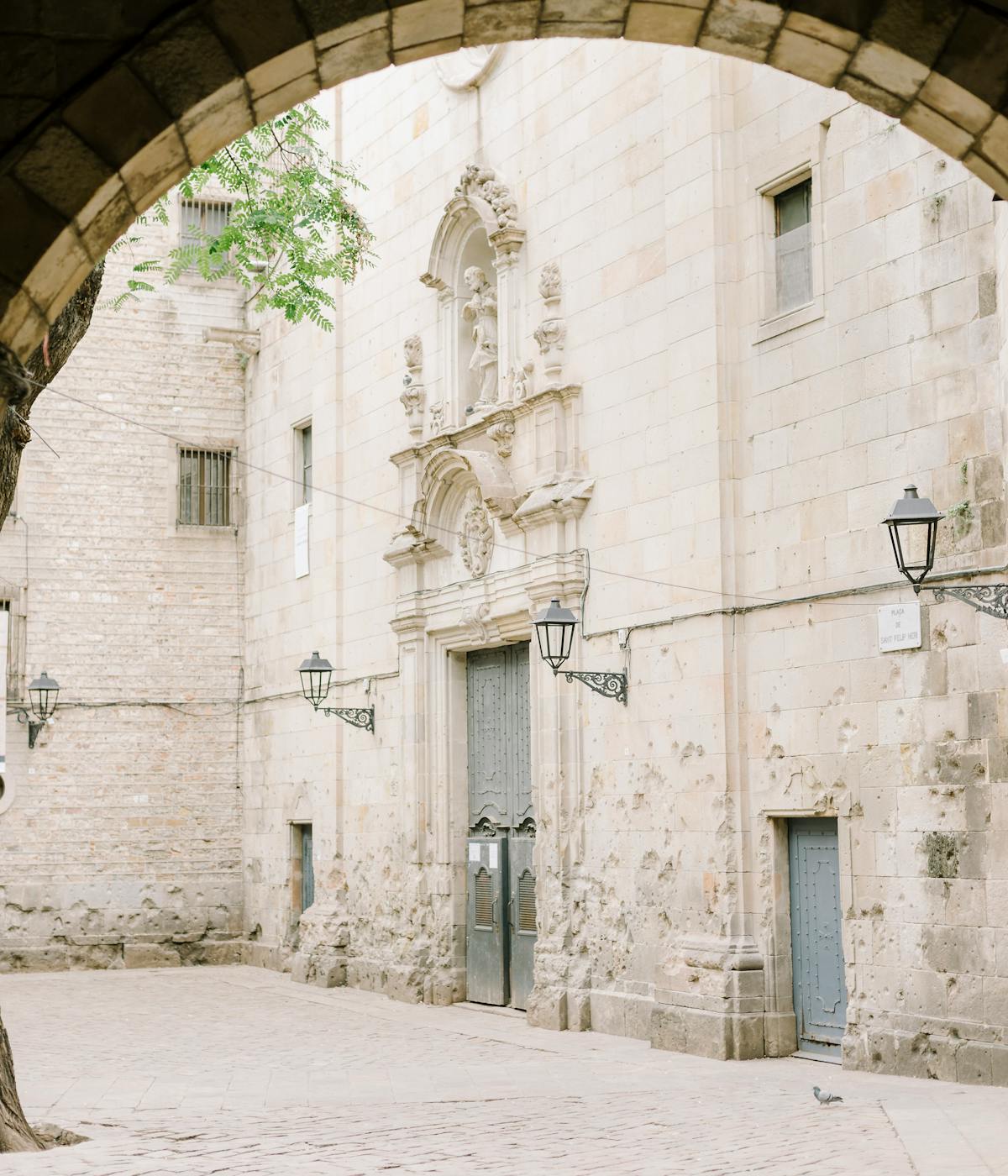
This is a more solemn stop on our tour of Barcelona’s history. Laid bare across this city’s beauty are harrowing reminders of its past, and Sant Felip Neri is the perfect example. At first glance, this square is peaceful and unassuming, with a small fountain and a baroque church. But if you look deeper, you’ll find pain etched into every stone.
In 1938, during the Spanish Civil War, Mussolini’s troops dropped bombs on civilian targets in this very plaza. Several schoolchildren were killed after seeking safety in the shelter below the church, which collapsed. Cracks and chips still cover the facade of the Església de Sant Felip Neri.
Today, the square is a school playground during the day, the terrace for a hotel restaurant in the evening, and a local hangout in the early hours of the morning. The visible damage to the church’s exterior, especially when combined with the sound of children playing, serves as a stark reminder of what can happen when society falls apart.
Plaça del Rei: Step Back in History
Head down Carrer de Montjuïc del Bisbe, then take Carrer de la Pietat through the General Archive of the Crown of Aragon. Upon exiting the archives, you’ll find yourself in Plaça del Rei, home to an interesting story:
- Legend has it that the steps in the left corner of this square are where Christopher Columbus presented his bounty after discovering America. Whether or not this story is true, Columbus’ findings had an important impact on Barcelona.
- Until this point, it was the prosperous capital of the powerful region of Catalonia. But after trade began with the Americas, Andalusia became the peninsula’s trading center.
- Due to this, along with the Spanish Inquisition and various plagues, Barcelona fell into neglect and didn’t regain its status until the Industrial Revolution.
However, we have Barcelona’s bad fortune to thank for the Gothic Quarter. If money had continued to flow, the structures you see today would have been knocked down to make room for more modern and fashionable buildings.
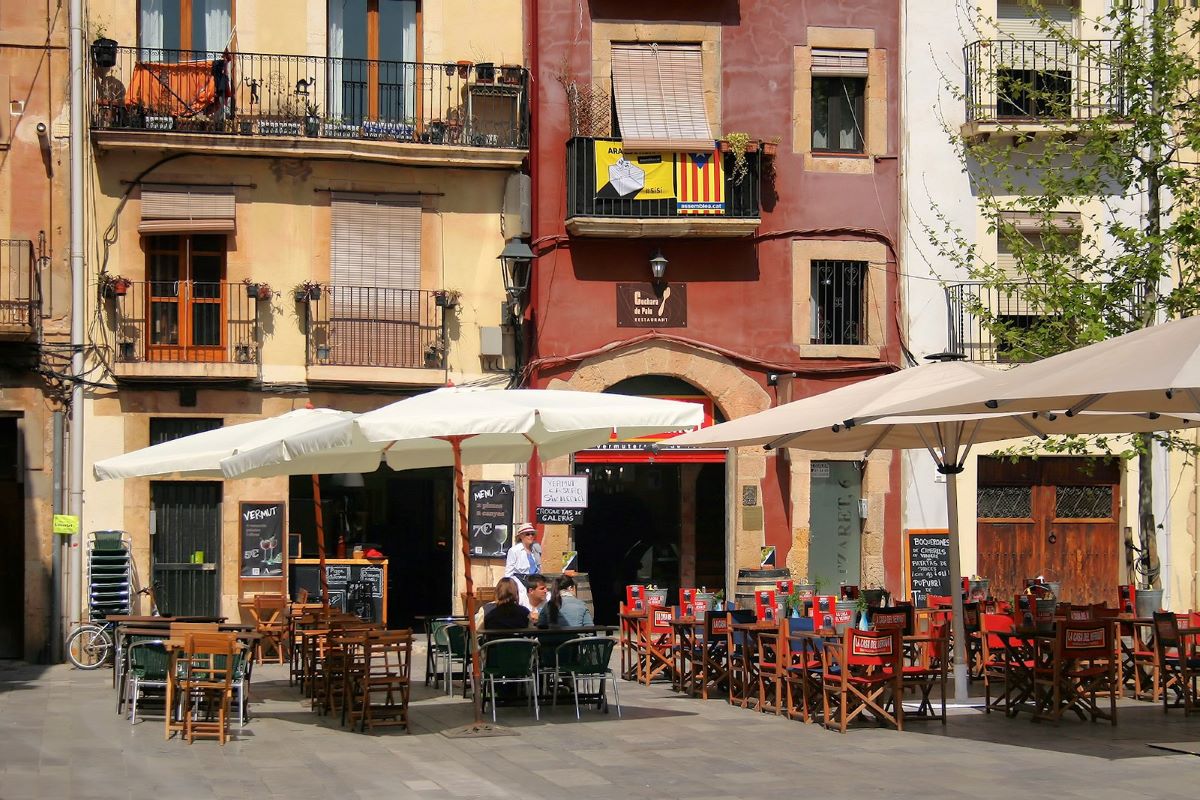
Eating in Barcelona on a Budget: Plaça de Sant Jaume
From Plaça del Rei, take Carrer del Veguer and pass the MUHBA history museum. Crouch down to look through the low windows at the remains of Roman Barcelona. You can even explore them under the cathedral.
If you’d rather stay above ground, follow Baixada de la Llibreteria to Plaça de Sant Jaume. This has been the political center of Barcelona for 2,000 years. It’s often a venue for demonstrations and peaceful protests.
We’ll finish this self-guided walking tour of Barcelona with a stroll to the shoreline, and check out where to eat in the Gothic Quarter:
- On your way to the water, stop at Bodega La Palma (Calle de la Palma de Sant Just, 7) for patatas bravas and croquetas. Today it’s known for tapas, but it used to be a famous Bohemian hangout frequented by Picasso and his contemporaries.
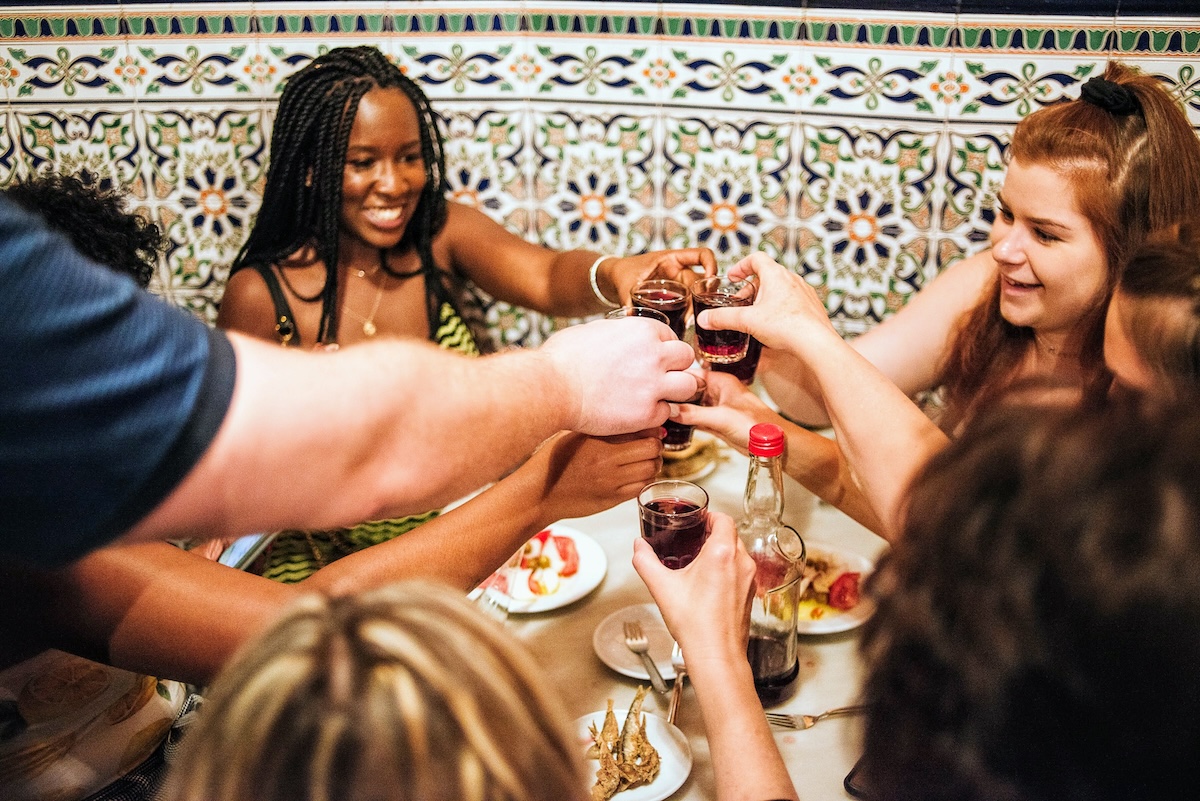
- Just five minutes away, you’ll find La Plata: a local institution beloved for its food, atmosphere and staff. The manager, Pepe, is there every day. Grab a table or a spot at the bar and enjoy the fried fish, tomato and onion salad, butifarra and, house vermouth.
Looking for even more things to do in this part of Barcelona? Don’t miss these 10 best things to do in Barcelona’s Gothic Quarter!
Taste the Best of Barcelona on Tour
Want to discover the real Gothic Quarter away from the hoards of tourists? Why not join us on our Barcelona Tapas, Taverns, & History Tour where our knowledgeable guides will take you through the Gothic Quarter to authentic tapas bars, explore Roman to Moorish architecture, and uncover secrets of Barcelona’s past.

Featured Review: Barcelona Tapas, Taverns, & History Tour
⭐⭐⭐⭐⭐ “My 16-year-old daughter and I were fortunate to have Eric as our Barcelona Tapas, Taverns & History Tour guide this week. The tour was an excellent balance between history and food. There was plenty of food, and it was all excellent…The tour was one of the highlights of our trip, and I would definitely book another tour with Devour on our next travels.”
– Lihi
Gothic Quarter Walking Tour FAQs
What are the must-see stops on a Gothic Quarter walking tour in Barcelona?
A self-guided walking tour of Barcelona’s Gothic Quarter should include landmarks like the Barcelona Cathedral, Plaça Nova, Plaça del Rei, and Plaça de Sant Felip Neri. These stops highlight the area’s Roman origins, medieval architecture, and key moments in the city’s history.
How long does a self-guided walking tour of the Gothic Quarter take?
Most self-guided walking tours of the Gothic Quarter should take between 2 and 4 hours, depending on your pace and how often you stop. The neighborhood is compact and walkable, so you can easily explore its main sights in half a day while leaving time for food and breaks.
Is the Gothic Quarter in Barcelona easy to explore on your own?
Yes! The Gothic Quarter is one of the best areas in Barcelona for a self-guided tour thanks to its compact layout and pedestrian-friendly streets. Wandering its narrow alleys and hidden squares is part of the experience, and you can easily adjust your route as you go.
What makes Barcelona’s Gothic Quarter special?
Barcelona’s Gothic Quarter is the historic heart of the city, with over 2,000 years of history visible in its streets. You’ll find Roman ruins, medieval buildings, and later architectural additions layered together, creating one of the most atmospheric neighborhoods in Barcelona.
Where should you start a Gothic Quarter walking tour?
Many walking tours begin at Plaça Nova, near the Barcelona Cathedral. This central location marks the entrance to the Gothic Quarter and provides easy access to the neighborhood’s main landmarks and historic streets.






Most helpful
Thanks so much for reading!