Last Updated on May 20, 2026 by Emma Fajcz | Published: November 16, 2018
Why shop at a neighborhood market instead of a supermarket? It comes down to the produce and the people: they’re the heart of community life. The products are local and seasonal, which translates to better quality—and they’re even more affordable. Shoppers run into familiar faces and catch up over the peppers. There’s no better place to feel the city’s pulse! Our Lisbon market guide will show you the best way to peek into the local culture!

While you’re busy browsing the markets, keep your eyes peeled for these 4 authentic Lisbon souvenirs that we love!
Table of Contents
What Is a Food Market in Lisbon?
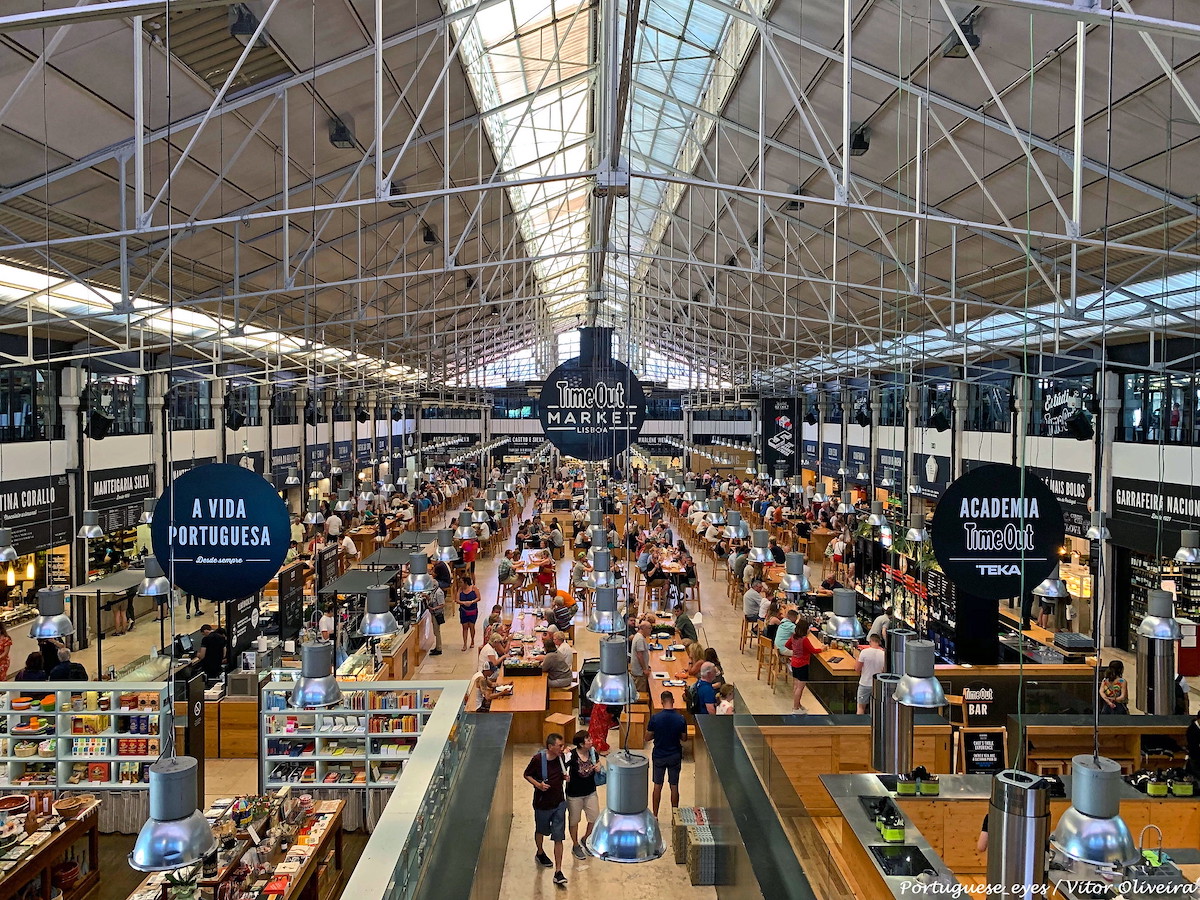
Markets in Lisbon are a combination of stalls selling fresh products, smaller stores providing other services, and food courts, restaurants, or cafés. Most will have different business hours for the different sections, with the cafés and restaurants open until late.
Some examples of multi-faceted markets are the Mercado de Campo de Ourique, Mercado de São Bento, Mercado da Ribeira (Time Out Market), and Mercado de Santa Clara (next to the flea market Feira da Ladra that takes place every Tuesday and Saturday).
Don’t miss our tips for visiting Mercado da Ribera if you’re planning on stopping by!

Best Time to Visit
Typically, markets in Lisbon are open from 7 am to 2 pm, from Tuesday to Saturday. Saturdays are busy from opening to closing time, so avoid this day of the week altogether if you can.
If you’re not looking for a specific ingredient or are just curious about the local culture, visiting by mid-morning on a weekday is ideal. It won’t be too crowded, because most regular customers will be done by then, or too slow, so you’ll still be able to feel that market vibe. With fewer people, there’s also a better chance that vendors will have more time to talk to you.
Many of the vendors may not speak English, but gesturing can go a long way.
How to Shop at a Lisbon Market
Chatting & Choosing a Stall
You’d be hard-pressed to find a vendor who isn’t sweet, talkative, and proud of their stall. That said, they’re also straightforward and they’re not there just to chat. The occasional dialogue will occur while deboning a fish or bagging half a kilo of onions, but that’s part of the customer service, not the focus of your trip.
Most locals have their go-to vendor for each different product, after years of nurturing a trusted relationship. Sometimes that relationship comes from their parents and their parents’ parents—shopping at a market can be a true family affair in Lisbon. Of course, newcomers are treated just as kindly.
It’s okay to browse and do some stall hopping if it’s your first time at a specific market, but don’t be surprised if the vendors start trying to lure you in. They’ll spot you as a first-time client and highlight the freshness and the bright colors of their products. Don’t feel pressured, though. You can acknowledge their efforts with a smile and a “thank you, I’m just browsing for now” (Obrigada/o, estou só a ver).

Making a Purchase
Buying fish and meat is an entirely different experience, because it typically involves a longer dialogue. If you already have your mind set on what you want, first they’ll ask you how you’re cooking it (stewing, baking, frying). Then they’ll ask you for instructions on how to cut it: thicker or thinner, with or without the skin (for poultry), leave the head or chop it off (for fish)?
When you’re not sure of what to buy, the dialogue is reversed. The vendor will ask you if you feel like something to stew or grill or fry, and, depending on your answer, a series of suggestions follows. It often includes sharing a family recipe or a special trick to season it.
Paying
All markets have ATM (multibanco) machines for cash withdrawals. Its easier, and appreciated, to always pay in cash.

Market Etiquette and Tips
- Standing in Line: If the stall you choose is crowded, memorize your place in line. There isn’t officially a formed line most of the times, but remember who was already there so you can easily see who came after you. The vendors will almost always do that for you, so you don’t have to worry too much. If you inadvertently cut in line, apologizing and waiting for your turn is enough to redeem yourself.
- Look, Don’t Touch: Don’t touch the merchandise without the vendor’s consent, especially when looking at fruits and vegetables. They would bruise quickly if every single potential client were to squeeze them for a ripeness check! No harm in pointing and asking if it’s ripe (¿Está maduro?). The vendor will do the checking and the demonstration.
- Sealing the Deal: Bargaining is not a habit in Lisbon food markets. All products have the price per kilo clearly displayed, and you’re free to compare them from stall to stall if you don’t have a favorite vendor yet. For fruits and vegetables, even if budget isn’t an issue, the vendor will ask you ¿Está bom assim? (is this okay?) while weighing it on an electronic scale before closing the sale. That’s your chance to add or remove items.

Looking for more places to browse for food? Here’s our favorite grocery stores in Lisbon!
Explore Lisbon’s Oldest Grocery Store With Us!
Book a spot on our Ultimate Lisbon Food Tour, and explore the city’s oldest traditional grocery store with us! Here, you’ll uncover the cultural significance of bacalhau, Portugal’s iconic salt cod and sample rich, buttery acorn-fed Iberian ham as you explore the role these delicacies play in Portuguese cuisine. Along the way, you’ll enjoy 8 tastes and 3 drinks at 7 small businesses in Lisbon (plenty of food for a full breakfast & lunch)!

Featured Review: Ultimate Lisbon Food Tour
⭐⭐⭐⭐⭐ “One of our best excursions while in Portugal. A great variety of food to experience. Helena was simply awesome! Our favorite guide on our trip. She had great places to eat (some we went back to) and the history she added to the experience was fantastic. It was so interesting I purchased a book on the history of Lisbon.”
– Bill
Lisbon Food Market FAQs
Are there hidden markets in Lisbon that fewer tourists know about?
Yes. Markets like Campo de Ourique Market and Mercado de Arroios attract mostly locals and offer fresh produce, baked goods, and everyday Portuguese dishes.
Can I combine visiting a Lisbon market with a guided food tour?
Yes. Many guided experiences, including Devour Lisbon tours, include visits to local markets to sample regional foods and learn about Lisbon’s culinary traditions.
Is cash still preferred at Lisbon markets or can you use a card?
Most modern stalls accept cards, but small vendors and traditional produce stands may prefer cash. It’s smart to carry a little of both.









Thank you dear for your wonderful post !!
Thanks for reading!