Last Updated on August 26, 2026 by Emma Fajcz | Published: October 25, 2018
It won’t take you long after arriving in Lisbon to notice Portugal’s affinity for sugar; glass display cases at local cafes show off everything from cookies and cakes to colorful tarts. However, the most iconic Lisbon dessert is the pastel de nata: a flaky pastry shell filled with sweet egg custard. Here are the 6 best places to try custard tarts in Lisbon, according to locals!

At a Glance: Custard Tarts in Lisbon
- What Are Portuguese Custard Tarts? This dessert is Portugal’s most iconic sweet, and it consists of a flaky pastry shell filled with sweet egg custard. Here’s the story behind pasteis de nata if you’re curious.
- What Are They Called in Portuguese? You might also hear these treats described as pastéis de nata (pastéis is the plural form of pastel) or pastéis de Belém (more on that in a bit). Many visitors know them simply as custard tarts.
- Where Do You Find Custard Tarts? Considering the fact that locals and tourists alike can’t get enough of them, it’s no surprise that you’ll find them everywhere from supermarkets to Lisbon’s best historic cafés. Keep reading for our favorite spots!
- Cost: A Portuguese custard tart (pastel de nata) typically costs €1.20 and €1.70.
- What Is a “Good” Custard Tart? Look for a pastry that has crisp and flaky pastry with a creamy, caramelized custard that’s rich without being overly sweet.
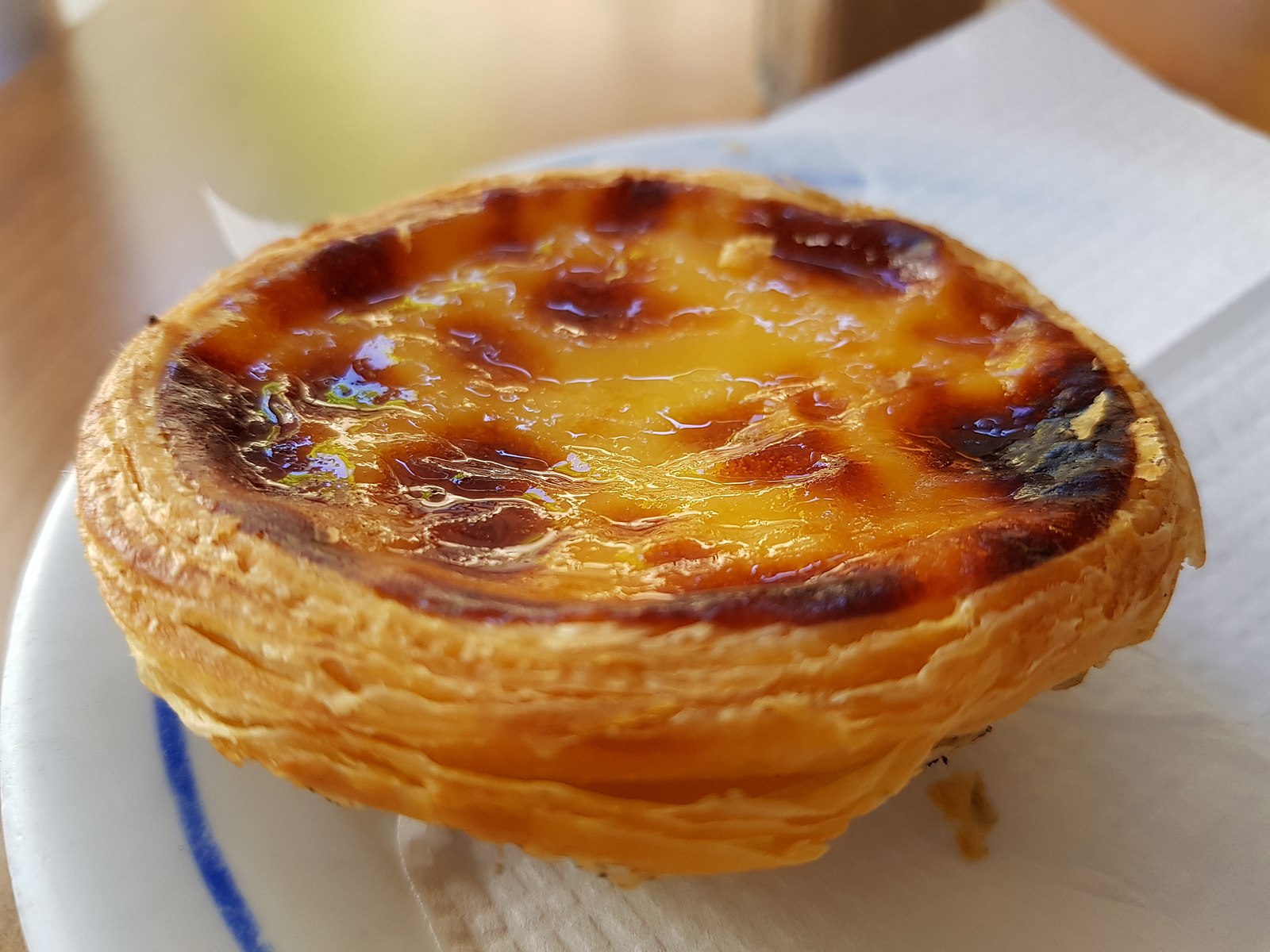
Pastéis de Belém
Begin your custard tart quest in the neighborhood where it all began: Belém. During the Liberal Revolution of the 19th century, monasteries and convents began shutting down. To help raise money, the monks from Belém’s Mosteiro dos Jerónimos started selling pastries in the sugar refinery next door.
Their pastéis de nata recipe made use of leftover egg yolks (they used the egg whites to starch laundry) to create a rich custard filling. Eventually the owner of the sugar refinery bought the recipe from the monks and opened Pastéis de Belém, the famous café where you can still try the original recipe for custard tarts in Lisbon.
This history explains why pastéis de nata are sometimes called pastéis de Belém. Technically the ones made here are the only true pastéis de Belém, but in reality the two terms are often used interchangeably. Now for the big question: Is the original recipe the best?
We’ll leave that up to you to decide… but it’s certainly smart to try several for comparison. What we do know is that it’s absolutely worth making the journey to Belém to try these particular custard tarts:
- From Lisbon’s city center you can take public transportation–the bus, train, or tram–down the river to Belém.
- If you’d rather drive or use a ridesharing service, it’s 15–20 minutes away by car.
- And if you’re up for a long (but scenic) walk, it’ll take you about an hour and 15 minutes on foot.
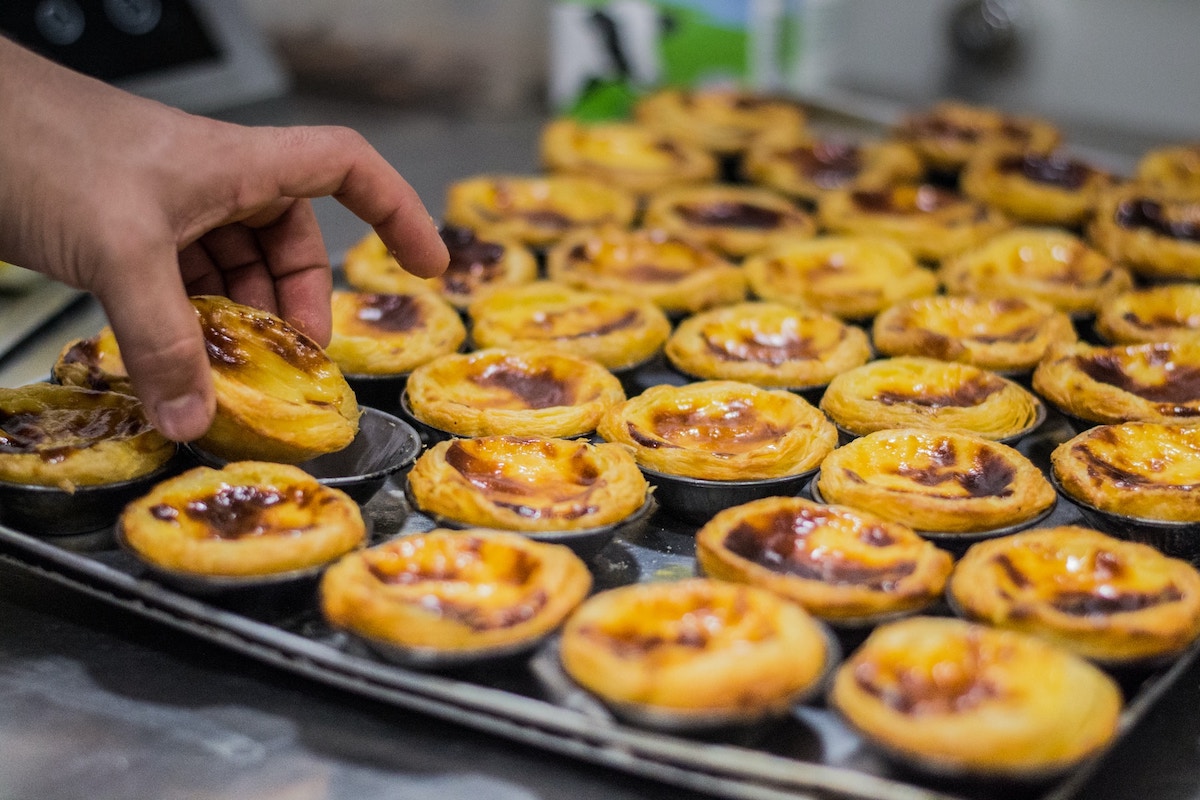
Manteigaria
If you ask a local where to try custard tarts in Lisbon, chances are they’ll mention Manteigaria. Apart from Pastéis de Belém, this is the most famous place specializing in pastéis de nata—and many people swear that it has the best in the city. The original storefront is in Chiado near Praça de Luís de Camões, but there are now locations all over Lisbon (and Porto too).
The name of this bakery pays tribute to Manteigaria União, the former occupant of the original location in Chiado, which once supplied butter to the entire city. But it also hints at the recipe, which relies on butter (manteiga in Portuguese) to create an exceptionally flaky pastry crust.
Pastéis de nata are the only thing on the menu at Manteigaria, other than a selection of drinks. You can either order your pastries to go or grab an espresso and watch the bakers work their magic in the kitchen. A pastel de nata plus coffee makes for the perfect minimalistic breakfast in Lisbon, although it’s also a great afternoon snack or late-night indulgence.
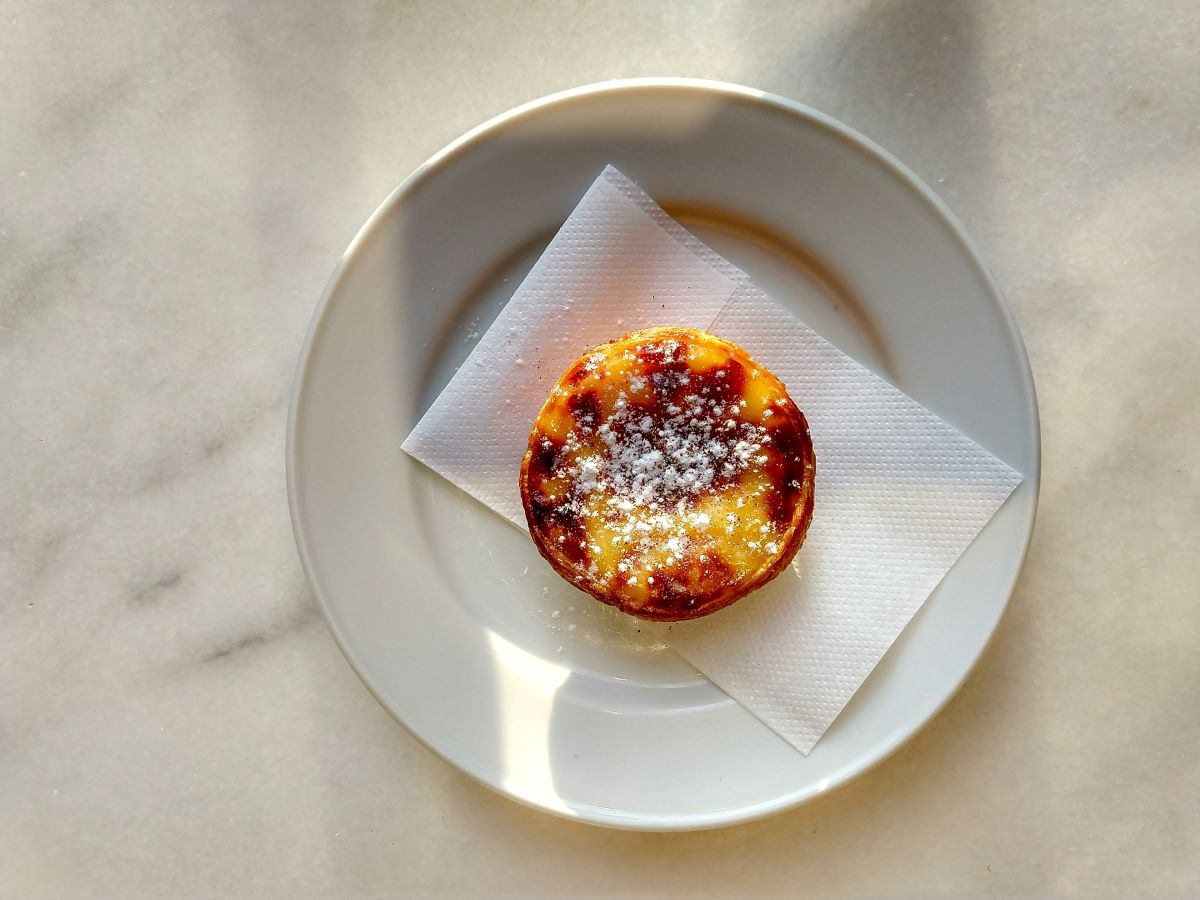
Insider’s Tip: Don’t forget to sprinkle the top of your custard tart with cinnamon and/or powdered sugar; you can grab packets of each if you take your pastries to go.
Confeitaria Nacional
Confeitaria Nacional is not only an excellent place to try pastéis de nata, but also a picturesque landmark. Open since 1829, it’s considered Lisbon’s oldest pastry shop. You’ll find it in Praça da Figueira, inside a grand Pombaline-style building (most of this area was rebuilt after the 1755 earthquake in the Pombaline architectural style, which is notably earthquake resistant).
The pastéis de nata here are made with a recipe that’s nearly two hundred years old, credited to the founder of Confeitaria Nacional, Balthazar Castanheiro. Although they’re not quite as famous as the ones from Pastéis de Belém, they’ve been around for almost as long.
There’s much more on offer here than just custard tarts; you’ll also find plenty of traditional Portuguese pastries like pão de Deus (a sweet bun with coconut topping), almendrados (almond cookies), and bolos de arroz (small cakes made with rice flour). Order a coffee, a pastel de nata, and maybe a couple of other treats and enjoy the café’s ornate decor.
Insider’s Tip: Can’t wait until you get to Lisbon? Make our Portuguese custard tarts recipe at home.
📍 Locations: There are two locations: one in Lisbon and one in Belém. If you’re staying in the city, visit their Lisbon location at Praça da Figueira 18B.

Versailles
Located in the business district of Saldanha, Versailles has been open for more than a century. It’s known not only for its decadent custard tarts, but also its unusually long pastry counter (which some say is the longest in Lisbon) and Art Nouveau style.
The dining room is decked out with large mirrors, sparkling chandeliers, and intricate wood paneling, and the staff’s snappy uniforms add to the romantic old-world effect.
Versailles also offers savory snacks, lunch, and dinner, but the highlight has to be its incredible pastries. Beyond the classic pastel de nata, you’ll also find a truly stunning selection of treats, from homemade ice cream and marzipan fruits to seasonal sweets like bolo rei (king cake) and folar de Páscoa (a traditional Easter bread).
📍 Locations: There are two in Lisbon, so pick whichever one is closer to you.
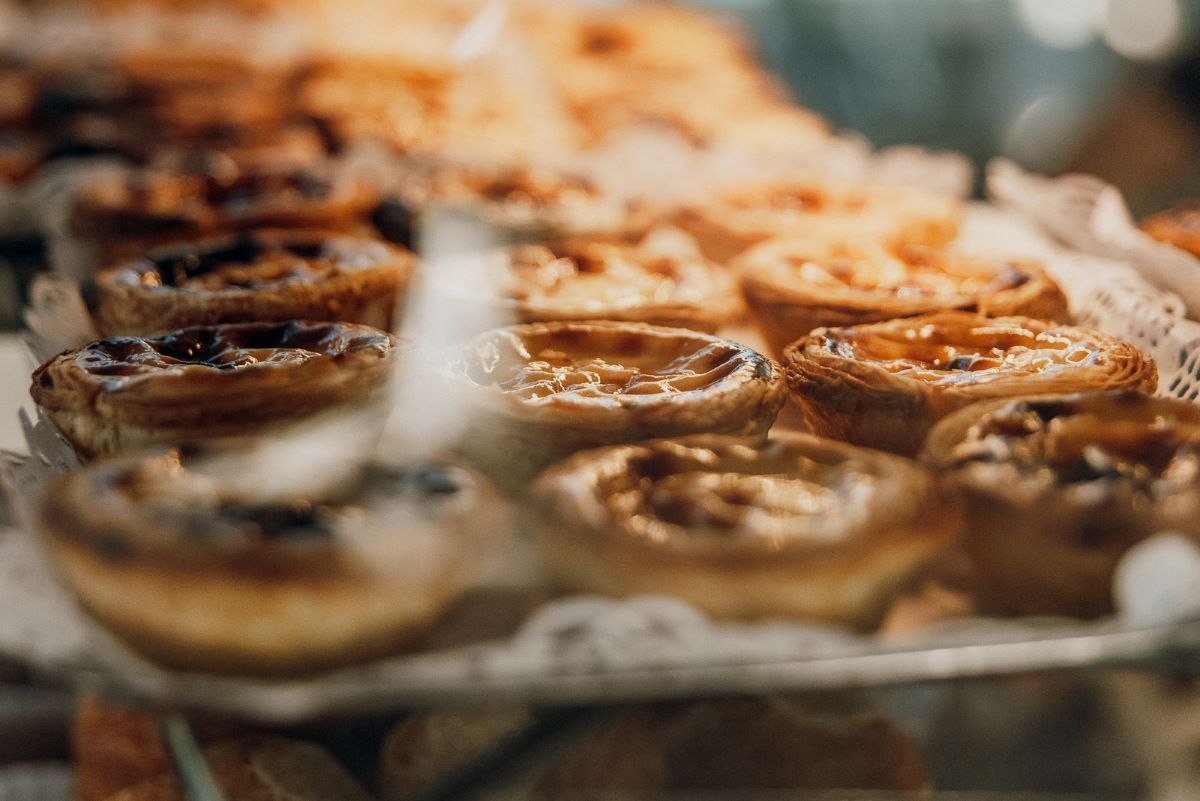
Castro
Castro is more than just a pastry shop; it’s an “atelier” specializing in custard tarts and nothing else. This place proudly claims to have a perfectly balanced recipe, with a filling that’s not too sweet and an especially crispy crust.
According to its website, each pastel de nata should be eaten in three bites—though some people prefer to scoop out the custard with a spoon and eat the pastry shell separately—and, crucially, always served warm.
Pair your pastry with coffee, tea, hot chocolate, or something stronger—the menu also includes Port wine and ginja (cherry liqueur).
📍 Location:You can visit either of Castro’s two locations in downtown Lisbon to pick up one or two pastéis de nata or a larger box to share.
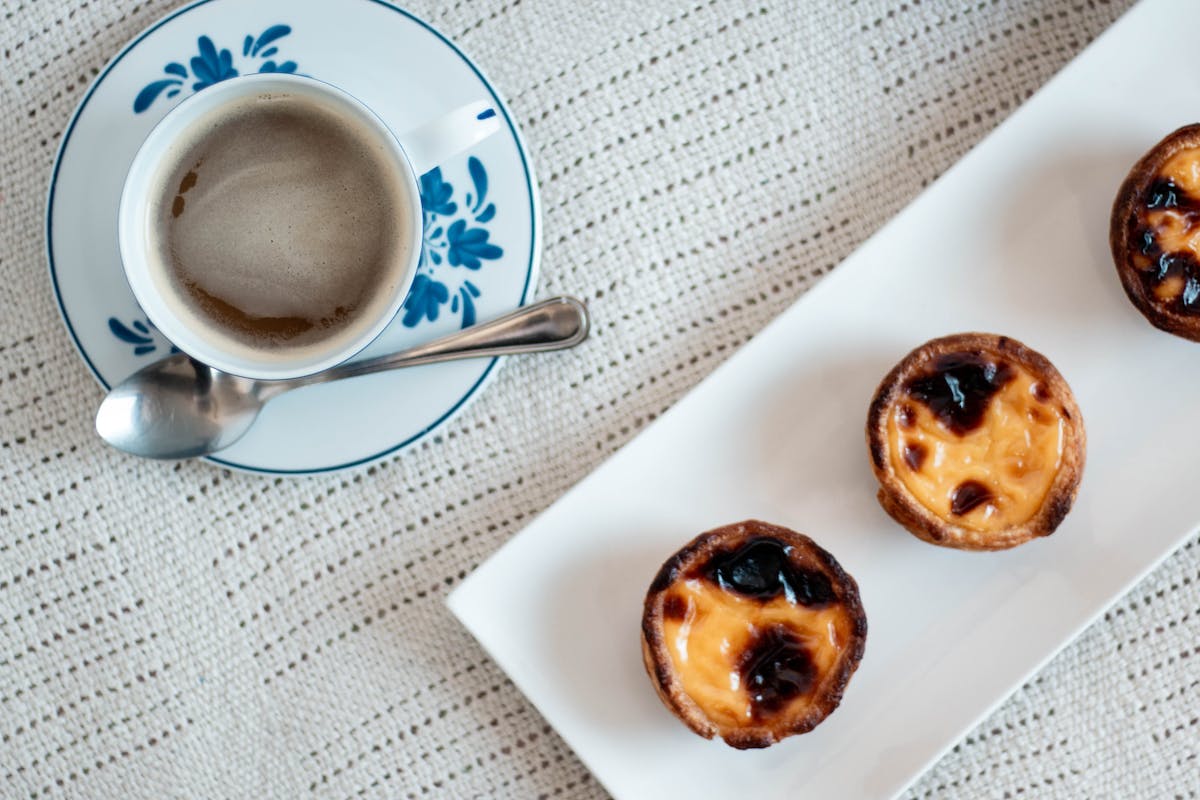
Vegan Nata
Lisbon has been named one of the world’s most vegan-friendly cities, but the idea of an authentic plant-based pastel de nata might still sound unlikely. After all, its main ingredients include eggs, butter, and milk. Enter Vegan Nata.
This was the first place in Portugal to popularize a vegan version of the traditional custard tart, and it’s been winning over the doubters ever since. Today you’ll find plant-based pastéis de nata at more than one vegan bakery around Lisbon, but Vegan Nata’s recipe reigns supreme.
It’s nearly indistinguishable from the version sold right down the street at Manteigaria—and some non-vegans even swear that they like it better. If you’re looking for a lactose-free, egg-free, or more sustainable pastel de nata, look no further.
📍 Location: R. da Misericórdia 9

Taste Pasteis de Nata With Us on Tour!
Spend your morning uncovering the soul of Lisbon’s historic neighborhoods—Baixa, Chiado, and Cais do Sodré—through its most cherished food traditions on our Ultimate Lisbon Food Tour.
With an intimate small group, you’ll enjoy 8 tastes and 3 drinks at 7 small businesses in Lisbon (plenty of food for a full breakfast & lunch). Sample the most iconic foods in Lisbon—from cherry liqueur to custard tarts—at the family-run spots that do them best.

Featured Review: Ultimate Lisbon Food Tour
⭐⭐⭐⭐⭐ “Helena our guide was amazing great story teller and this is the best food tour I’ve been in. Great food and so much history in this tour so worth the money must do!”
– Myldred
Custard Tarts in Lisbon FAQs
What are the custard tarts in Lisbon called?
Lisbon’s famous custard tarts are called pastéis de nata (the singular is pastel de nata). These small pastries are made with crisp, flaky puff pastry filled with creamy egg custard, then baked until the tops develop their characteristic caramelized dark top.
Where can I find the best custard tart in Lisbon?
There’s no single definitive “best” pastel de nata, but Pastéis de Belém is the most famous place to try one. The bakery has been making its signature pastéis de Belém since 1837 using a closely guarded recipe associated with the nearby Jerónimos Monastery. Other excellent bakeries and pastelarias throughout Lisbon offer their own versions, so trying several is part of the fun.
What pastry is famous in Lisbon?
The pastel de nata is the pastry most closely associated with Lisbon and is one of Portugal’s best-known foods. You’ll find it everywhere from traditional pastelarias to bakeries and cafés.
What is the most famous Portuguese tart?
The pastel de nata is the most famous Portuguese pastry, and it is often called a Portuguese custard tart in English. The best-known historical version is the pastel de Belém, made at Pastéis de Belém in Lisbon; although similar in appearance and style, the bakery reserves that name for its own traditional tart.